There are 498 blog posts for you to enjoy.
Juanjuí, Perú
July 12, 2025
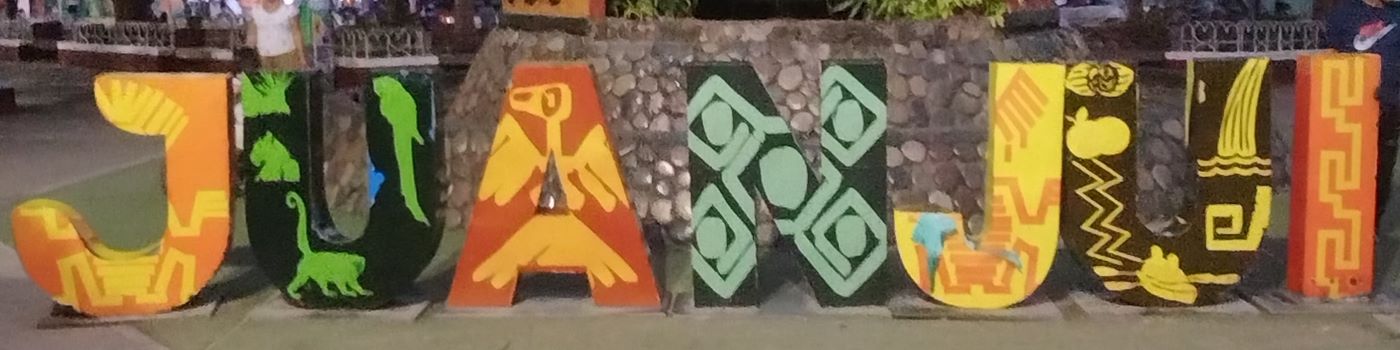
Juanjuí, Perú is the capital of the Mariscal Cáceres Province in the heart of
San Martín. It is home to about 55,000 people. The Huallaga River runs right alongside town, carving a wide
valley between the Cordillera Central and the Cordillera Azul. Along the river, there is one 2-block-long area of park space and restaurants, referred to as their tourist area.
Before the Spanish arrived, the area was marked by conflict, with many rival native groups fighting
for control of the land. When the Spanish missionaries arrived, they forcibly organized these diverse ethnic groups
into "reducciones" (missions) and relocated them into unfamiliar territory. It's a familiar
story, one that mirrors the experiences of Indigenous communities in North America. Those who resisted were
labeled "infidels." Juanjuí was officially recognized as a district in 1866, elevated to villa in
1906, and was finally given city status in 1927. That promotion didn't sit well with Sapasoa, the former provincial
capital. The rivalry turned heated, with both towns fighting over political control. Eventually, in 1940, the national
government settled the dispute by creating a new province, naming Juanjuí as its capital.
Read More
Tingo María, Perú
July 10, 2025

Tucked in the heart of Perú's Selva Central, Tingo María is where the Andes exhale, and the Amazon begins. This lively town, capital of Leoncio Prado Province in the Huánuco region, was officially founded in 1938 as part of a government colonization effort. Thanks to its strategic location along the Huallaga River and the central highway, it quickly grew into a hub of agricultural trade. Today, it has a population of around 46,000 and serves as a vibrant crossroads between jungle and highland.
Read More
Pozuzo and Codo del Pozuzo, Perú
July 7, 2025
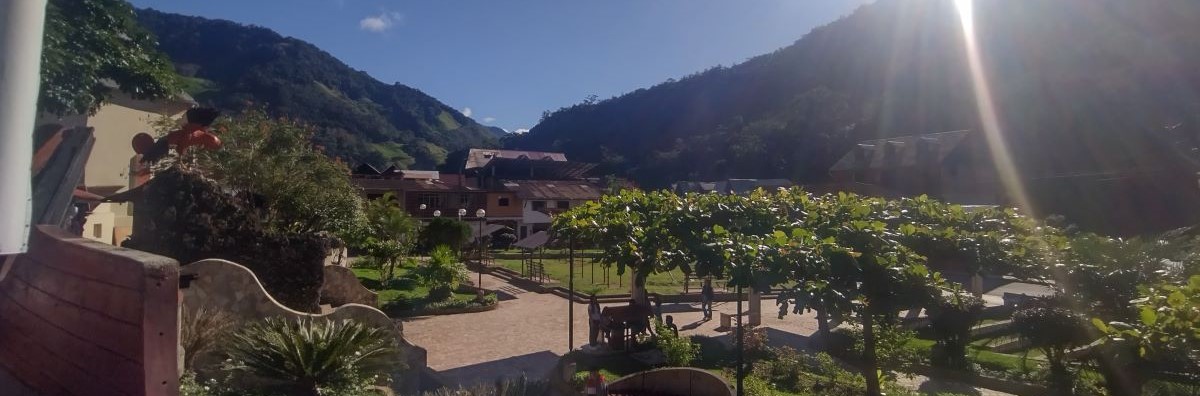
Pozuzo and Codo del Pozuzo are both located on the eastern side of the Andes Mountains in central Per?. After my visit to Huancabamba I went to Pozuzo. Pozuzo is a very nice town, apparently more on the high-middle class level, as was Huancabamba. But, the big difference here is the people - they do not say 'buenos dias' or 'buenas tardes' etc. When I say those the few that respond give little more than a mumble. The town itself is pretty, the plaza, the valley around. I like it here, it's just the people - they are not as friendly as the previous couple of towns.
Read More
Huancabamba, Perú
July 3, 2025

Huancabamba is a tiny town and district of Oxapampa Province. This mountain town sits at around 1,666 meters above sea level, surrounded by mountains with orchids scattered all throughout and the crystal-clear waters of the Huancabamba River.
With just around 1,000 inhabitants, it's only about five blocks square, compact, peaceful, and refreshingly unpretentious in a region better known for bigger stops like Oxapampa or Pozuzo.
There's not a lot to the town, obviously, considering its tiny size, but they do have a nice central plaza. It's a simple, quiet main square with a gazebo and a replica of a sailing ship, and lots of shade trees and benches.
Read More
Villa Rica, Perú
July 2, 2025
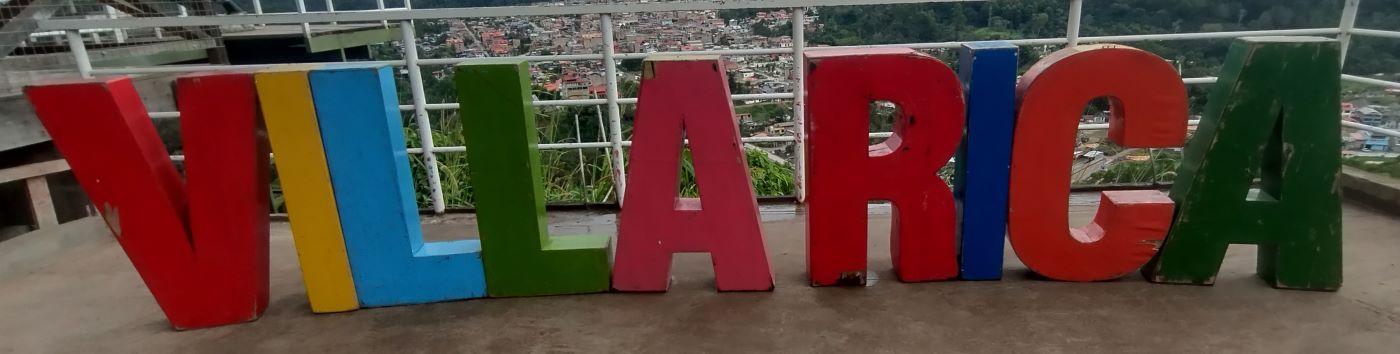
Almost hidden off the main highway, on the eastern slopes of the Andes, Villa Rica sits at1,460 meters above sea level in the Oxapampa Province of the Pasco department in central Perú. ItsWikipedia entry outlines the essentials - founding in 1925 by German immigrants, it gained its status for its coffee,and 2017's 18,763 population - it doesn't capture the texture of daily life, cultural collisions, or why this placestays in your mind long after you've left.
We know the Franciscan mission at Cerro de la Sal began in 1635 and faced rebellion under JuanSantos Atahualpa in the 1740s, it's less known how local Yánesha communities bypassed Spanish control for morethan a century afterward.
Read More