There are 499 blog posts for you to enjoy.
Loreto, Ecuador: A Jungle Town, Not a Tourist Stop
January 24, 2026
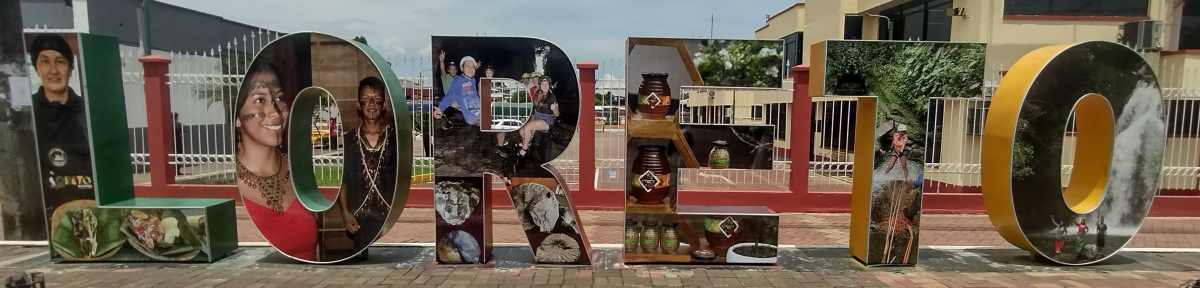
Loreto, Ecuador sits in Orellana Province, deep in the Amazon Basin within the Napo River watershed.
It's a small cantonal seat with only a few thousand people in town, but the canton itself is massive - more
than 2,200 square kilometers (850 square miles) of jungle, rivers, hills, and rough terrain. That territory stretches from lowland rainforest up toward the slopes of Volcano Sumaco and the Galeras range. The town lies along the E20 highway, between Coca and deeper Amazon forest, and functions more as a service and transit hub than anything resembling a tourist destination.
Most of the canton is rural; roughly 90% of the population lives outside the town, including
Kichwa Indigenous communities and mestizo settlers - with Loreto itself occupying only a small, settled slice of
the larger landscape. It's hot, humid, green, and practical, not a place of tidy plazas or Andean charm. Loreto
was officially designated a canton in August 1992, making it a relatively new administrative unit, even though the land
and its people have a much longer history.
Read More
Dark Patterns - the Modern Internet Part 4
January 21, 2026
Have you ever wondered, Why can't websites be built in a way that actually works properly, makes sense, and are truly useful? For example: Facebook (full of problems) - I'm logged in, of course, and looking at my profile page and I used the search to find, for example, all posts with "Marx" - searching for Groucho Marx quote-memes. There are 5 of them. There they are, fully visible, in all their glory, and a 3-button hamburger menu. Oh, but what is that? A menu with only one option? Does that qualify as a menu? Not in my opinion. That one option is to save the post. So, if I want to delete the post I'm looking at, I have to click the post to look at the same post in another view, then I get a menu with many options. Why can't they just put that menu on the previous view of the post? Seriously, building a working website is not rocket science.
Ha! Welcome to the modern web, where billion-dollar companies somehow still can't design a menu that behaves like...you know...a menu.
The thing is, these sites could be built sensibly. They just aren't. And it's not because the engineers don't know how, it's because the entire product philosophy of Big Web is, well, dumb by design.
Read More
Baeza, Ecuador: Where the History Outgrew the Town
January 17, 2026
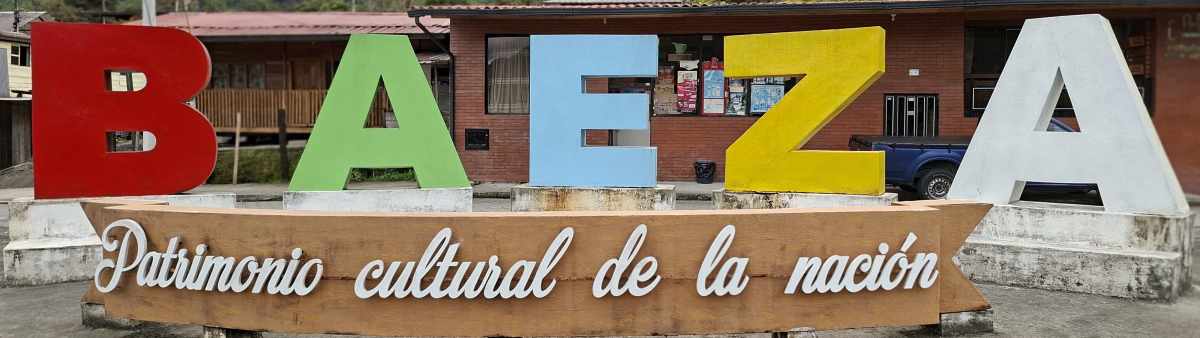
Baeza, Ecuador, sits in the lower slopes of the Eastern Andes Mountains in northern Ecuador. Sitting in a valley at an elevation of 1914 meters (6280 feet), this very small town of around 5000, was founded in 1559. Other than stopping for a meal, there's nothing here to see or do. There's a nature reserve a short drive outside of town, and looking at the Wikipedia page and its mention of a "municipal integrated farm" - well I didn't see any such thing in walking all over the tiny town, and Google maps shows "zoologico" which is typically a zoo or zoo-like place. Are they the same? I don't know, can't help you on that one. And there's the "Old Baeza" neighborhood just a few minutes walk out of the town proper. It's a neighborhood with its own church, a very unkempt "park" or plaza, maybe originally, a few hostals, and a tiny convenience store. At the front, alongside the highway, is a tiny park area with a couple of statues and the city name sign (pics in the photo album). It's all rundown, tired, and not at all what the Wikipedia describes it as.
Read More
Dark Patterns - the Modern Internet Part 3
January 14, 2026
Have you ever wondered, Why can't websites be built in a way that actually works properly, makes sense, and are truly useful? For example: Facebook (full of problems) - I'm logged in, of course, and looking at my profile page and I used the search to find, for example, all posts with "Marx" - searching for Groucho Marx quote-memes. There are 5 of them. There they are, fully visible, in all their glory, and a 3-button hamburger menu. Oh, but what is that? A menu with only one option? Does that qualify as a menu? Not in my opinion. That one option is to save the post. So, if I want to delete the post I'm looking at, I have to click the post to look at the same post in another view, then I get a menu with many options. Why can't they just put that menu on the previous view of the post? Seriously, building a working website is not rocket science.
Ha! Welcome to the modern web, where billion-dollar companies somehow still can't design a menu that behaves like...you know...a menu.
The thing is, these sites could be built sensibly. They just aren't. And it's not because the engineers don't know how, it's because the entire product philosophy of Big Web is, well, dumb by design.
Read More
Cayambe: High Altitude, Quiet Streets, and a Market That Takes Over
January 10, 2026

Cayambe, Ecuador, also known as San Pedro de Cayambe, was founded in 1824, was reversed in 1851, then reestablished in 1883, and sits at 2839 meters (9285 feet). The town has a population of around 45,000, mostly indigenous people. The town is located in the northern Ecuadoran Andes Mountains and sits on the lower slopes of the Cayambe volcano. The equator is only a few minutes' drive south of town. There is a monument area, but how accurate it is, I don't know, as I didn't go to it. The origin of the name has at least 4 stories, so I'm not even going to delve into that.
Read More