My Books on Amazon






There are 72 blog posts for you to enjoy.
Puerto Quito, Ecuador
September 8, 2025

Querto Quito is not in the Quito area, it's 140 kilometers (87 miles) away from Quito. Anyway, Puerto Quito has a population of less than 5,000 in the urban area, and the parish about 25,000. Puerto Quito sits just inside the western side of the Andes Mountains in northern Ecuador. It's a very nice little valley with Rio Caoní running alongside. The entire business district area of the town is about four blocks by four blocks. That's quite small, but it is a pleasant town, and on weekends the town center is full of people. There's a riverside park where you can swim in the river, but if you're not in the water you're going to get eaten by midges (tiny biting flies), so wear long pants. The town sits at only 135 meters above sea level, so while it is in the mountains, it's still very low, giving it a very pleasant temperature range, though the humidity does get quite high, as expected.
Wikipedia
La Concordia, Ecuador
September 5, 2025

La Concordia is in the north-central part of the Coastal Zone of Ecuador. While north of the craziness of the crime-ridden central- and southern-coastal regions, the police here are still on high alert and have a big presence throughout the town. The shutdown of the town by 7pm is a bit less noticable here compared to Quevedo and Babahoyo. La Concordia has a population of around 35,000 and dates back to only 1955, so no historical architecture here. Actually, nothing of much interest here, other than the fact that the equator passes through the town.
Read MoreQuevedo, Ecuador
September 4, 2025
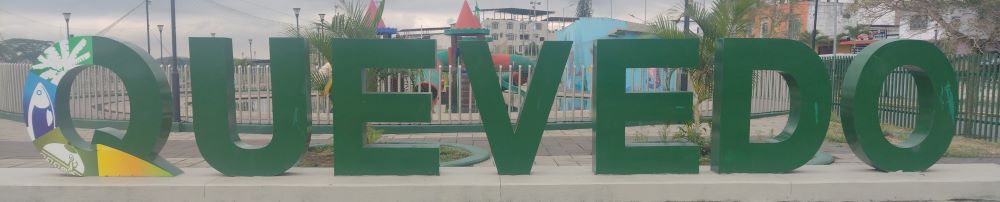
Is Quevedo Safe for Tourists?
No, not right now. Numbers + experience both say avoid.
I visited Quevedo about 3 years ago, and I'll tell you right up front - don't bother visiting this city if you visit Ecuador. Skip it. In fact, skip the entire La Costa zone. The crime rate is astronomical. The littered streets, the dirty parks, it's just not a pleasant place. Instead, cross the mountains and visit La Selva zone, the jungle, or Amazon, region. Clean towns, much, much friendlier people, very low crime. Here in the coastal region (everything west of the Andes Mountains) is a high crime zone. And I'm not exaggerating.
Read MoreColombia: The Outlier Cousin of South America
September 2, 2025

Travel long enough through South America and patterns start to appear — the familiar Costa / Sierra / Selva rhythm of Perú and Ecuador, the European flair of Argentina and Uruguay, the coastal pull of Chilé. And then there's Colombia. Same continent, but it marches to its own beat. From the way Colombians identify themselves to the words they use for their regions, the country stands apart. On a recent trip — sparked by spotting unexpected cacao plantations in central Ecuador — I found myself reflecting on just how different Colombia really is.
Read MoreBabahoyo, Ecuador
September 1, 2025

Babahoyo, Ecuador—home to just under 100,000 people—sits in the lowland plains west of the Andes. Though it’s far from the coast, it’s officially part of the 'Costa' region—one of Ecuador’s three major zones: the Coast (Costa), the Mountains (Sierra), and the Jungle (Selva). Babahoyo, AKA Santa Rita de Babahoyo. The word Babahoyo comes from the Chorrera culture and means "dark hawk," referring to the snail hawk, a bird that lives in the rice fields and feeds on snails. During the colonial era, Babahoyo was known as Bodegas de Babahoyo - Warehouses of Babahoyo - because the Customs and Royal Warehouses were located here, controlling trade between Guayaquil and the cities of the Ecuadorian Andes Mountains.
Wikipedia

I used to teach English as a foreign language in Barranquilla, Colombia. Now I'm retired and traveling throughout South America.
I'm from Kennewick, Washington, USA. In my previous life, as I call it, I was an IT guy, systems administrator, computer tech, as well as a shipping/receiving guy and also worked as a merchandising guy in a RV/Camping store.