My Books on Amazon






There are 72 blog posts for you to enjoy.
Vilcabamba, Ecuador
January 13, 2023

Vilcabamba, Ecuador: Way back in the Inca years the royalty used this valley as their personal retreat area. It is also called the "valley of longevity" due to its long-living residents. Some say people commonly live to be 100 and more years old in this region. Whatever the reason for this reputation, it most likely comes down to these two facts: they are active, eat healthily, and take care of their elders. And a fairly large number of young people leave Vilcabamba to live in the larger cities. There has been some real research done here to determine if in fact there is any truth to the legend. The results? No. In fact, people here live no longer on average than people anywhere else.
Read MoreLoja, Ecuador
January 11, 2023

Loja, Ecuador: The full name is "City of the Immaculate Conception of Loja". Loja is known as the Music and Cultural Capital of Ecuador. In the photo album is a photo of the Parque de la Musica. Something in the park that isn't visible in the picture is the inscriptions on the walls of music staves - the inscriptions of deceased famous Ecuadorian composers, singers, and musicians. The population of Loja is around 200,000. In the park called "Parque Colinas del Pucará", at the top of the hill, you can find what appears to be an old castle, but in reality, this place used to be a cable car station. Sometime between 2020 and 2023 it was closed and the cable car and cable were removed. Now you can go up the smaller tower and get a nice view of the valley. There are pics in the photo album. The trailhead starts in Parque Pucará.
Read MoreCatamayo, Ecuador
January 9, 2023

Catamayo, Ecuador: Population: about 30,000. One of the tourist attractions nearby is the Chicaca Tunnel. It is a tunnel dug out of the mountain by the Incas. There is a gravel road to it, through it, and beyond. I did not make it out to the tunnel on this visit to Catamayo, but I will on my next. And, there will definitely be a next because I like this town.
The city dates back to the 16th century but it was in the 19th century when it really started to take off. The main industries are agriculture, the production of tiles and bricks, sugar, and tourism. Catamayo sits in a valley in the Andes Mountains, surrounded by mountains.
Read MoreMachala, Ecuador
January 7, 2023

Machala, Ecuador: They call it the "Banana capital of the world" because the port here is where the Ecuadoran bananas are shipped out to countries all around the world. This part of Ecuador is basically all banana plantations, right up to the edge of the city. Machala has a population of around 232,000 but the entire metropolitan area is almost a half-million.
Read MoreSanta Isabel, Ecuador
January 5, 2023
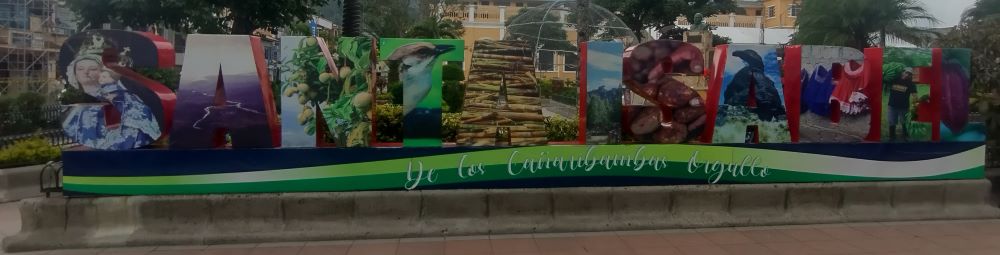
Santa Isabel, Ecuador: a small town south of Cuenca and built on the side of the Yunguilla Valley, and I mean literally going up the side of the valley. The population is around 21,000. The average elevation is 970 meters (3182 feet). The original name was Chaguarurco, which according to the original language means "sheltered, hot". It was originally peopled by the Cañris indigenous people until the Spanish conquistadors came in and exploited the gold mines. They did such a bad job of mining that the mountain collapsed onto the mines killing numerous indigenous and Spanish people. The mines were buried under so much earth they had to be abandoned. Later, in the 17th century, there was an epidemic that just about wiped out the town. The town finally was recognized officially as Santa Isabel in 1945.
Read More
I used to teach English as a foreign language in Barranquilla, Colombia. Now I'm retired and traveling throughout South America.
I'm from Kennewick, Washington, USA. In my previous life, as I call it, I was an IT guy, systems administrator, computer tech, as well as a shipping/receiving guy and also worked as a merchandising guy in a RV/Camping store.