My Books on Amazon






There are 72 blog posts for you to enjoy.
Macas, Ecuador
September 7, 2023
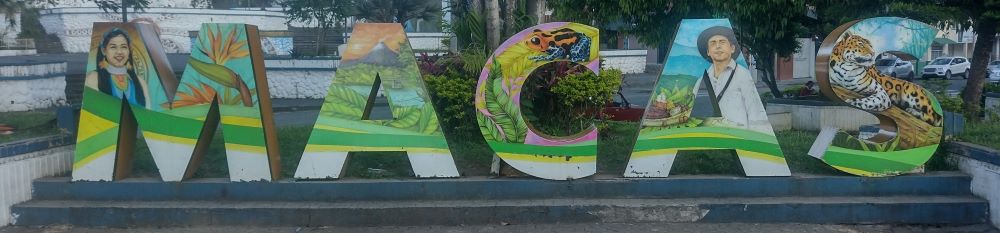
Macas, Ecuador, has a population of about 23,000, according to several websites, though I find that hard to believe. The town's city center is much too big for that small population, and it's way out of proportion to 23,000. At any rate, it's a town in central-eastern Ecuador in the Andes Mountains at the edge of the Amazon Rain Forest in the Upano Valley, with the Upano River running alongside the town. Its byline is "Emerald of the East." The town, founded in 1538, was given the name "Sevilla del Oro." Later, in 1599, it was refounded with a new name, "Macas."
Read MoreZamora, Ecuador
September 5, 2023
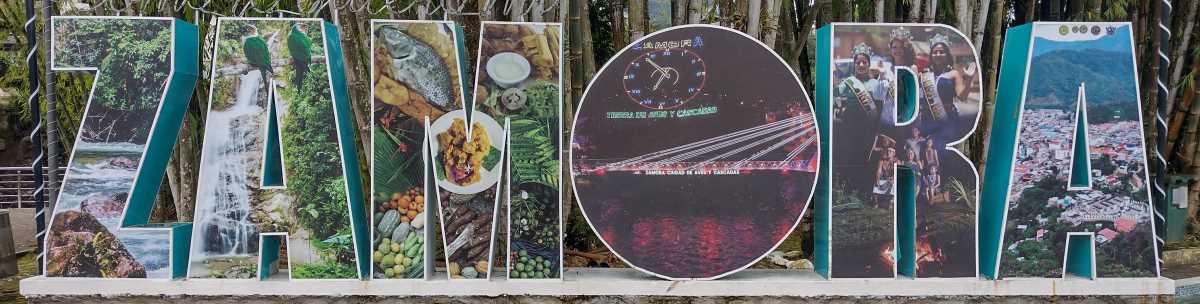
Zamora, Ecuador, has a population of about 32,000. Zamora is in the southeast of Ecuador, in the mountains, on the side of the Amazon Rain Forest. Zamora is known for its pristine Amazon rainforest and its biodiversity, as well as for ecotourism. There is a lot to explore in the surrounding mountains. There is a trail close to town that crosses along one of the mountains and is supposed to have a great view of the valley and the town, but because of the rain, almost constant for the two days I was here, I didn't hike it because I'm traveling with only one pair of shoes and I don't much care for getting them covered in mud.
Read MoreCatamayo, Ecuador
September 2, 2023

Catamayo, Ecuador, is a city in the southcentral part of Ecuador. It is between the larger Eastern Range and the smaller Sub-Andean Belt where it sits in the Catamayo Valley. East of the mountains is the Amazon Basin.
Read MoreHuaquillas, Ecuador
January 17, 2023
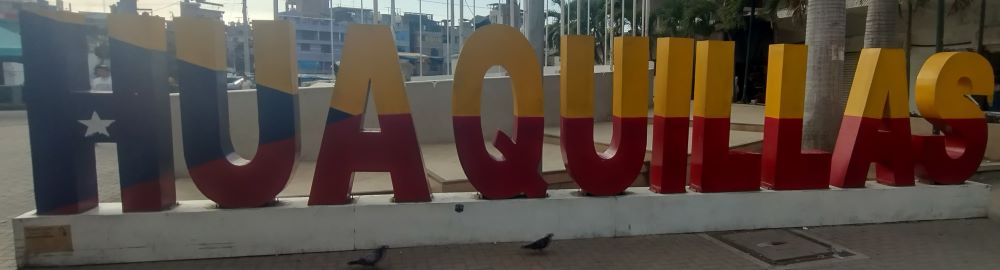
Huaquillas, Ecuador: Population: around 48,000. The entire metropolitan area has a population of about 82,000. The city didn't really start to grow substantially until the 20th century. The economy is based on shrimp farming, agriculture, and commerce.
By 1935 tobacco was the main source of income for the tiny town of about 200. The land was/is very rich and crops grew extensively, until the war with Perú in 1941. The Perúvians diverted the river and it has never been the same since. It wasn't until 1964 that the issue of the border with Perú was finally ironed out.
Read MoreSanta Rosa, Ecuador
January 16, 2023

Santa Rosa, Ecuador: Population: around 85,000. The city didn't really start to grow substantially until the 20th century. The economy is based on shrimp farming, bananas, livestock, agriculture, some mining, and commerce.
Way back when, before the area was called Santa Rosa, there were two or three different groups of people living here, people who had previously been ruled by the Incas. There have been remains of their settlements found in the area of Santa Rosa. The "city" dates back to the mid-1500s but the conquering Spaniards didn't follow the regulations for founding a new city, so there are no founding documents. Some historians say the city was officially founded in 1600, and then a second time in 1617. From July 1941 until February 1942 there was a war, though not declared, between Perú and Ecuador.
Read More
I used to teach English as a foreign language in Barranquilla, Colombia. Now I'm retired and traveling throughout South America.
I'm from Kennewick, Washington, USA. In my previous life, as I call it, I was an IT guy, systems administrator, computer tech, as well as a shipping/receiving guy and also worked as a merchandising guy in a RV/Camping store.