There are 498 blog posts for you to enjoy.
Tocopilla, Chile
March 29, 2023

Tocopilla, Chile: population: about 28,000. The city was founded in 1843 as a cove, I guess that means it was even less than a town or village. In 1870, the cove shipped out its first shipments of saltpeter. In 1890, the railroad was expanded to allow for more shipping of saltpeter.
1915 saw the starting-up of a thermoelectric power plant. This helped to increase the production of copper. Starting in the 1930s the nitrate (saltpeter) mining started to taper off, then after that, the fishing industry started to collapse due to over-fishing, with these there were mass lay-offs and people started to leave town en masse. In fact, Tocopilla lost around 10,000 people who moved to Antofagasta, to the south.
Read More
Iquique, Chile
March 28, 2023
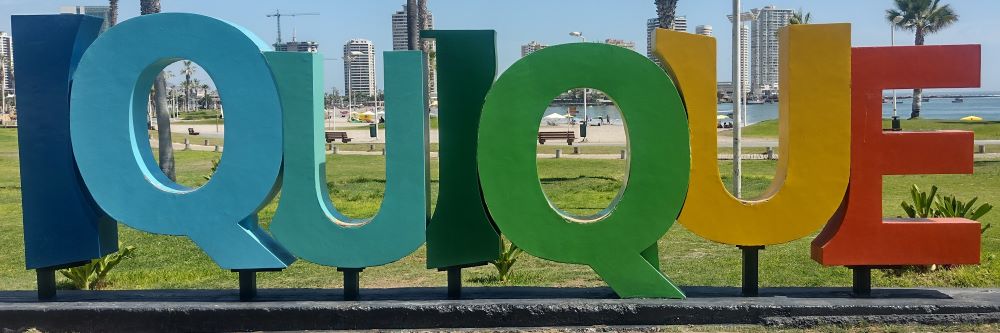
Iquique, Chile: population: about 190,000. Back in the early 1880s, there was a war between Chile and Perú, and Iquique and the regions north of it were taken by Chile.
The history dates back to something like 7000 years BC. Iquique and other towns of northern Perú owe their existence to saltpeter mining. In 1835, Charles Darwin visited Iquique and apparently wasn't very impressed with what he saw, he said, Iquique is a town "very much in want of everyday necessities, such as water and firewood". The city's economy now relies on commercial and port activities as well as tourism.
Read More
Arica, Chile
March 26, 2023
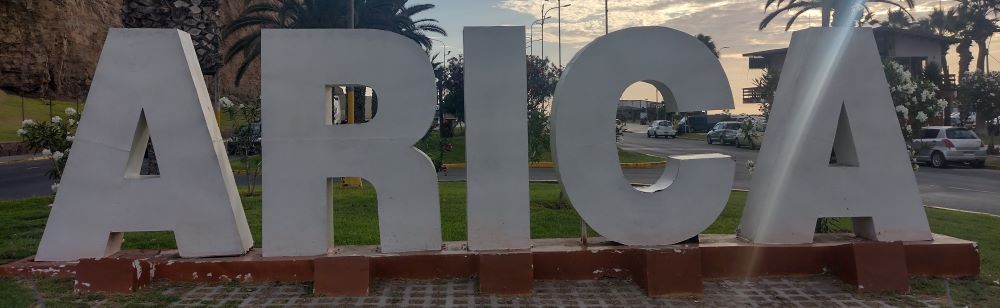
Arica, Chile: population: about 248,000. Arica sits 18 kilometers (11 miles) south of the Chile-Perú border. In Chile, Arica is known as "the city of eternal spring." Arica was founded in April 1541, or 1570, or possibly 1584.
The Arica area has been inhabited for thousands of years. Archeologists have found pottery, petroglyphs, and geoglyphs dated back 10,000 years. Between the 4th and 9th centuries, the Tiahuanaco people lived in this valley and named it Ariacca. They lived with an agricultural and maritime economy. In time, they disappeared and were replaced by other groups, and these groups expanded the area further inland and introduced stepped farming, agriculture, and livestock.
Read More
My South America Journey - Update Part 1
March 25, 2023
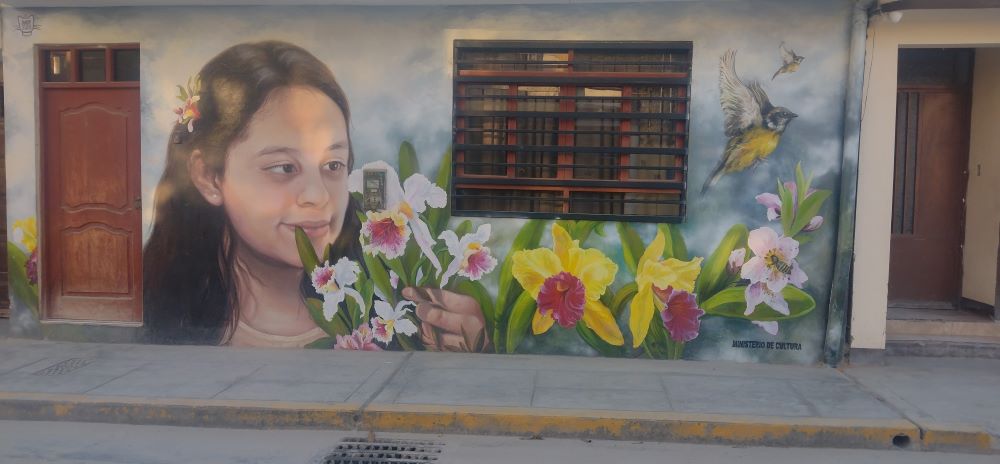
My South America Journey Update - Part 1
Since I left Roldanillo, Colombia back on October30 I visited Ecuador and Perú and just entered Chile a couple of days ago. A quick comparison of Ecuadorand Perú brings up what is to me the most noticeable difference:the people of Perú are friendlier than the people of Colombia andEcuador, in general. But, when anyone in this part of the worldgets behind the wheel of a car or on a motorcycle, they becomeincredibly rude or selfish. Out on the roads, it's "every man forhimself." I think I will find this throughout all the countries Ihave yet to visit. It's just part of the culture of SouthAmerica. Every driver of any and every motor vehicle thinks thathe/she is the king/queen of the road. I think the only reasonthey don't have more crashes is because of the slower speeds theytypically drive and all the speed bumps, which are almost everyblock of every road. Obviously, that's an exaggeration, but it'snot too much of a stretch. As far as comparing small-town peopleto big-city people it's the same everywhere - city people aretoo busy to be helpful and friendly and town people are more thanwilling to be friendly and helpful. I've seen this very often inmy travels. After spending nine and a half years in Colombia Ireally did fall in love with the town of Roldanillo, at the baseof the Andes in the northern part of the Valle del Cauca. But,the political and tax situation of Colombia has been changingfor a few years now and has been and continues to become lessfriendly to foreigners. Thus my search in the other countries ofSouth America which are friendlier to foreigners.
Read More
Tacna, Perú
March 24, 2023
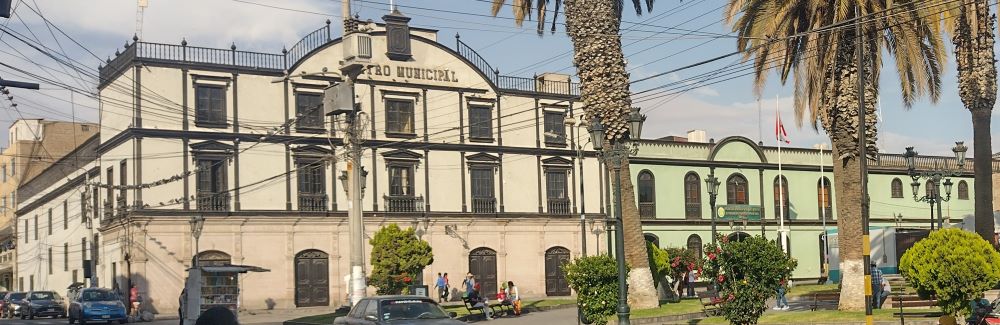
Tacna, Perú: population: about 325,000. Tacna is a desert city in the far south of Perú. Tacna was founded in June 1855.
The Tacna area has been occupied for many centuries by various indigenous groups. Around the year 800 the Incas came into the area and "settled" it. Then later, the Spaniards arrived and they "settled" it, again, in 1572. The first church was built in 1679. Over the years there had been many wars and battles between Perú and Chile and Tacna was typically right in the middle of them all. It wasn't until 1929 that the Tacna region was incorporated into Perú.
Read More