There are 488 blog posts for you to enjoy.
Overwhelmed and underwhelmed, what happened to whelmed?
December 16, 2025
Yes, “whelm” is a real word, and it showed up before both underwhelmed and overwhelmed.
It originates from Old English “whelmen,” meaning to cover, submerge, or overturn. Think of waves, floods, and things going badly for
sailors. That’s some grim stuff. To be whelmed originally meant you were buried, drowned, or otherwise having a very
bad day.
Then someone came up with overwhelmed, and it stuck, because being extra-buried is apparently very
relatable. Underwhelmed came much later and is basically a sarcastic back-formation. People noticed
“overwhelmed” and said, “Fine, then I’m underwhelmed,” even though that’s not how
prefixes were meant to work here. English shrugged and let it happen.
Read More
Consistency Isn't Integrity
December 10, 2025
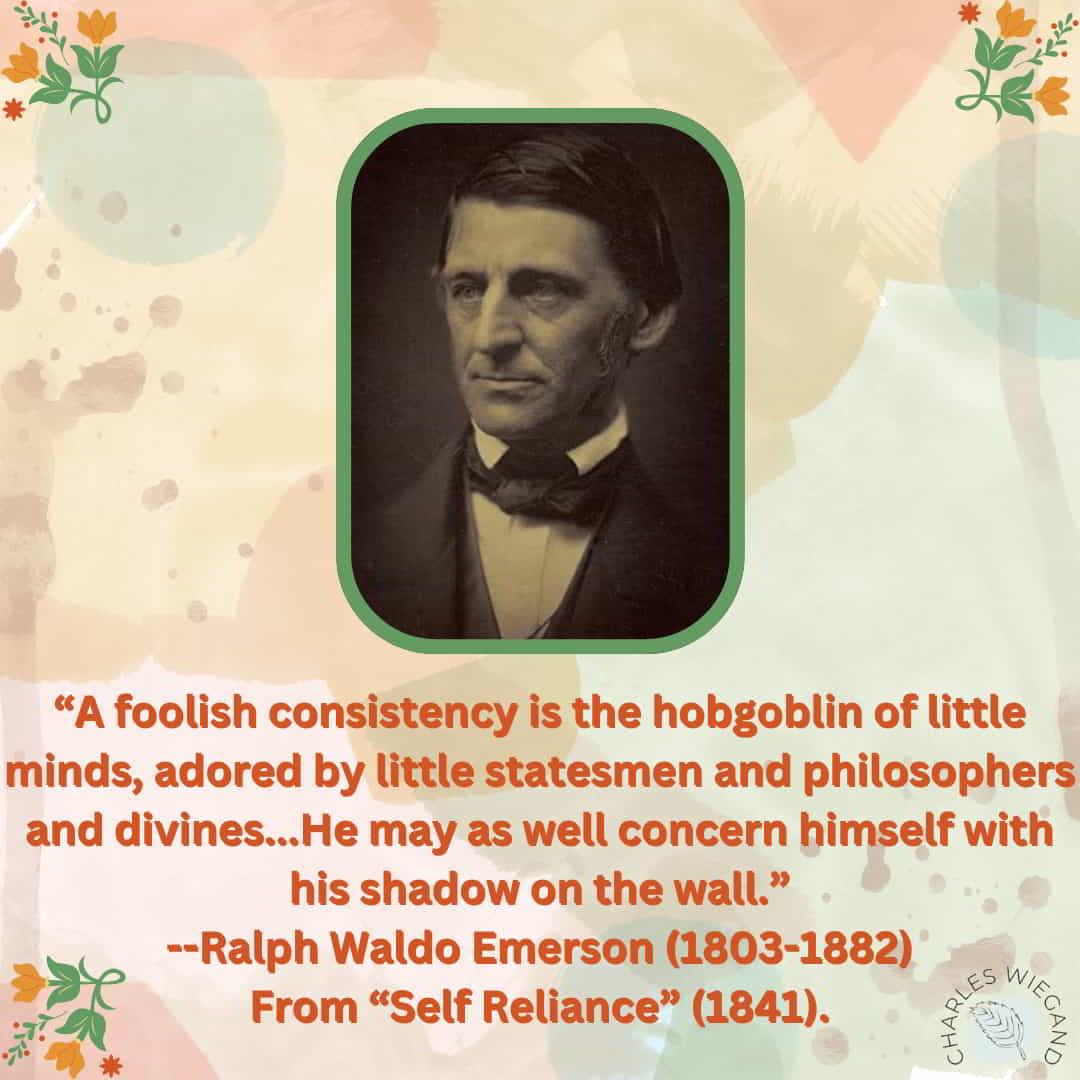
"A foolish consistency is the hobgoblin of little minds, adored by little statesmen and philosophers and divines...He may as well concern himself with his shadow on the wall."
--Ralph Waldo Emerson (1803-1882)
From "Self Reliance" (1841)
Emerson's line hits with a kind of quiet ferocity. He’s not gently suggesting that people should loosen up, he's flat-out mocking the idea that rigid consistency is a virtue. To him, clinging to an old opinion just because you once said it is about as meaningful as worrying about your own shadow on the wall. It's a performance, not a principle. He isn't criticizing consistency that grows naturally out of clear thinking; he's going after the kind that's powered by insecurity - the fear of looking wrong, changing course, or admitting you've learned something.
The heart of his argument is this: a thinking person evolves. A growing person contradicts themselves. A brave person risks being misunderstood, mocked, or accused of "flip-flopping." Emerson believed that true integrity means listening to your present mind, not locking yourself to the past. If yesterday you believed X, but today you've learned enough to believe Y, he'd say the honest thing to do is admit the change openly. To Emerson, refusing to evolve isn't admirable, it's cowardice disguised as reliability.
Read More
Live the Cream You Pray For
December 3, 2025
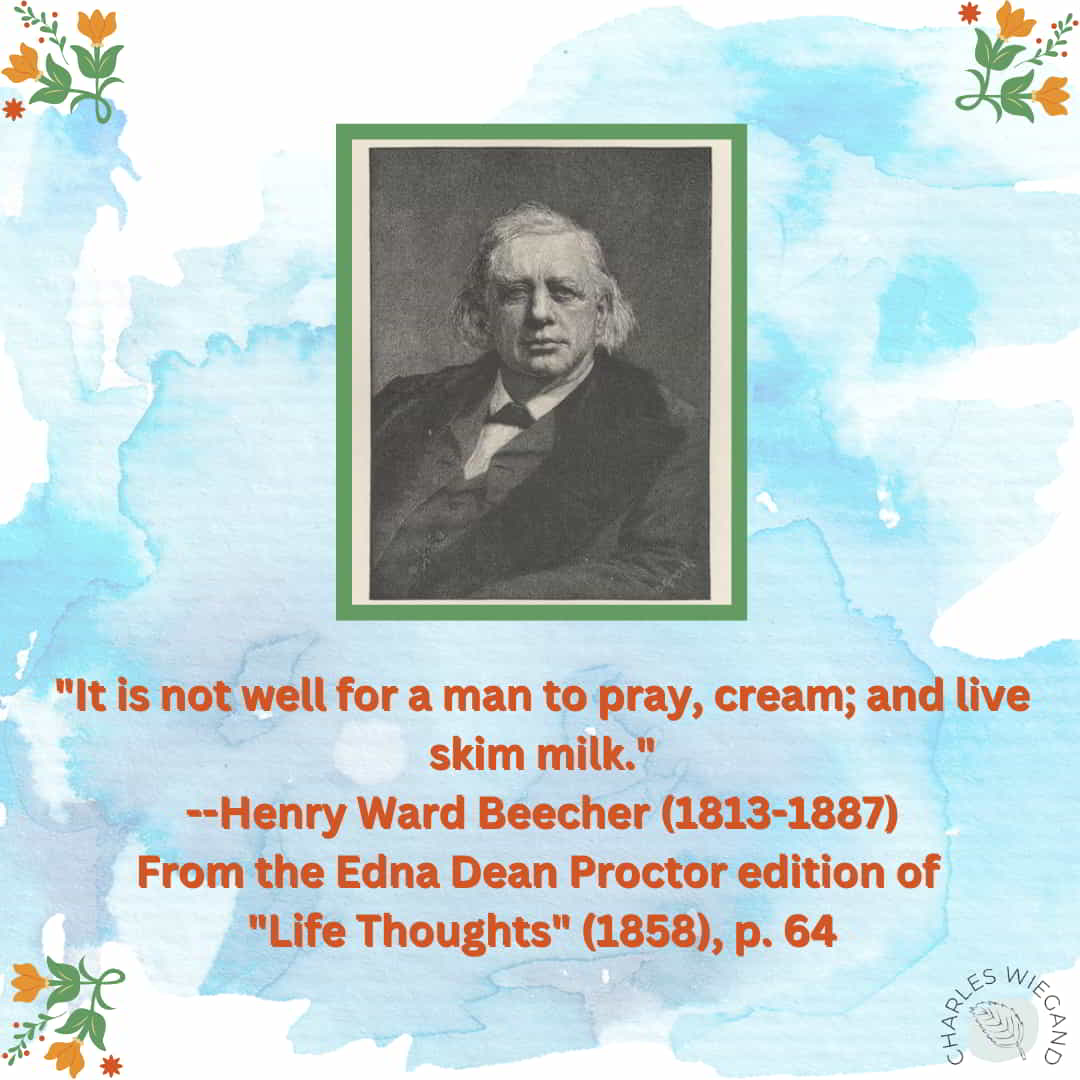
"It is not well for a man to pray, cream; and live, skim milk."
—Henry Ward Beecher (1813–1887)
From "Life Thoughts" (1858), p. 64
Most people read that line and assume Beecher is talking about money or material comfort - don't pray for "cream" if your life is "skim milk." But that's not it at all. When you read the actual surrounding text, Beecher's aim becomes unmistakably clear: he's attacking the gap between lofty spiritual talk and timid, watered-down living.
Read More
My South America Journey - A Brief Summary - Part 3
November 26, 2025
I’ve finally settled into Roldanillo, Colombia, where I’ll be for at least five months. Maybe longer, maybe not, residency is technically an option, but I doubt I’ll spend my days wrestling with immigration offices when I could be drinking coffee in the plaza. Besides, residency in Perú and Ecuador is easier than in Colombia. Before I get too comfortable, I want to rewind and share the trip that brought me here: a winding route through Peru, Ecuador, and into Colombia.
Read More
My South America Journey - A Brief Summary - Part 2
November 19, 2025

Traveling through South America gives you an interesting exploration of many different cultures, histories, and languages. Having visited and lived in multiple countries across the continent, I've come to appreciate the distinct variations not just in accents, but also in everyday language, as influenced by the region's colonial past, European immigration, and indigenous cultures.
Read More