My Books on Amazon






There are 118 blog posts for you to enjoy.
Pisco, Perú
February 26, 2023
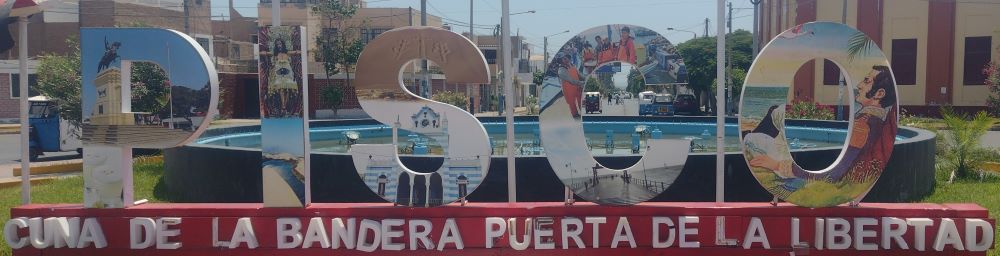
Pisco, Perú: population: about 86,000. Pisco is a town on the coast of central Perú. It's generally a nice place, the majority of the city is clean, and they have a new mall, granted it's not big, but it's new. My first impressions are that I like Pisco, but then, just this morning, I walked into the city center looking for a restaurant serving breakfast. I found a few. My first question for each was "What kind of coffee do you have? Instant or filtered?" They all replied, "instant". I turned around and walked out. In one restaurant the waitress said, "filtered" and pointed to the coffee machine so I said, "Great, give me a cup of coffee, black." And she asked, "What? We have cappuccino, frappuccino, crapaccino, etc." I asked for Black Coffee, simple regular black coffee. She had no idea what I was asking for. I couldn't get her to understand that I wanted only regular unadulterated black coffee. I turned around and walked out of there. So, I'm eating mixed nuts for breakfast and drinking water with lemon. I suppose it is healthier. Then this evening, I went to the mall to the big grocery store to buy two bottles of water with pineapple flavor. It's the only store in Pisco I have found this water in. The two bottles came to around 8 soles (Perúvian money) and I gave her a 20 sole bill. She said it was too large for only 8 soles and she couldn't accept it. I said, "Seriously? The difference is only 12 soles, you have that in coins." She said something about the policy for amounts under 10 soles and not accepting bills of 20 or higher. I couldn't believe it and left without buying anything there. What a stupid policy, especially when the store is jam-packed with customers waiting in long lines.
Read MoreCañete, Perú
February 24, 2023
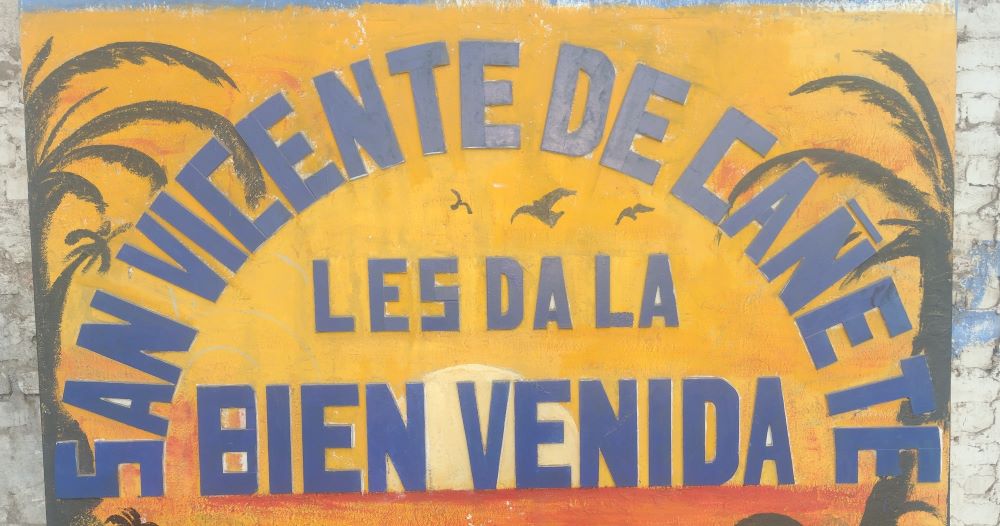
San Vicente de Cañete, Perú: population: about 60,000. San Vicente de Cañete is a small town also known as the "Cradle and Capital of National Black Art." The history dates back to pre-Inca times. The leader of the original inhabitants, Chuqui Manco, resisted the Incas for four years before finally succumbing to the conquerors. Then the Spanish explorer Mendoza arrived and founded the town of Villa de Cañete. During the following years, the rich built haciendas and brought slaves from Africa to work in the fields and orchards. Slavery was abolished in 1854 so the slave owners had to find new slaves. They brought in people from China. And that's the end of the history I can find including two Wikipedia pages. I found a trails website that talks about a path/trail that can be hiked, ridden on a mountain bike, or possibly driven (not sure about that) from Cañete to Huancayo in the Andes. Supposedly it's a beautiful ride. I imagine it probably is.
Read MoreMala, Perú
February 23, 2023
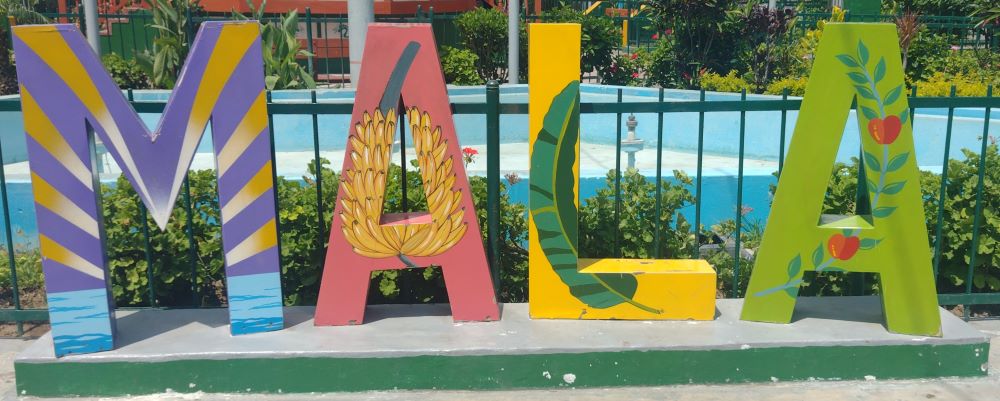
Mala, Perú: population: about 54,000. Mala is a small town a few kilometers away from the beaches of the Pacific Ocean. It is surrounded by hills that are actually very big sand dunes. The history goes back to pre-Inca times with the Huarco people who were eventually conquered by the Incas. In 1537 the Spanish conquistadors arrived and conquered the Incas and took over the area. Now the area has a large banana and platano industry, farming, as well as tourism and commercial services.
Mala has a desert climate. The average daytime high of 24° C (75° F), and the night average low of 15° C (59° F). The city's elevation is 30 meters (98 feet). Mala averages 109mm (4.3 inches) of rain per year.
Read MoreLima, Perú
February 21, 2023
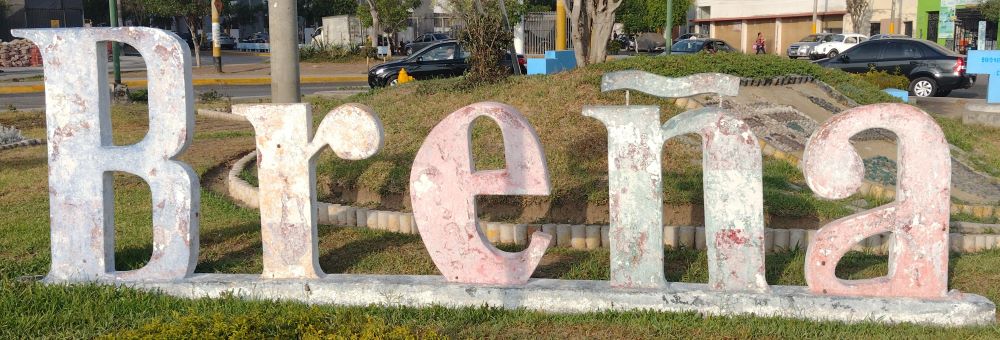
Lima, Perú: population: about 9.8 million for the city and the entire metropolitan area—11.3 million. Lima is a big city, one of the largest in the Americas. Lima was originally founded as "Ciudad de Los Reyes" (City of The Kings).
Lima has a desert climate, also said to be mild with subtropical temperature ranges. The average daytime high of 22° C (72° F), and the night average low of 17° C (63° F). The city's elevation ranges from sea level to more than 1500 meters (5000 feet). Lima averages 6.4mm (.25 inches) of rain per year. Yeah, that's right, a quarter of an inch of rain per year. That equates to an average of only 18 days a year in which a tiny bit of rain is recorded. Humidity is consistently between 80% - 85% throughout the year. Foggy mornings are common, and when I was on the bus entering the city it was quite foggy. Here's an interesting fact: Lima averages 1284 hours of sunshine annually. Compare that to London, England at 1653 hours and Moscow at 1731 hours. Yet, here it is in a desert along the coast near the equator.
Read MoreMazamari, Perú
February 18, 2023

Mazamari, Perú: population: about 30,000 for the entire metropolitan area. In 1873, Franciscan missionaries arrived and started cultivating coca and rubber. In 1913, there was an uprising by the native people and the missionaries were run out of the area. That was followed by an influx of immigrants from Austria, Hungary, and Germany. Between 1930 - 1940 the missionaries returned. They built a farmhouse, school, chapel, and airfield. In 1956, the airfield was finally officially opened after years of toiling at clearing the land. In 1958, a committee was formed to build a highway from Mazamari to Satipo. Since 1965 the airport has been used for training police paratroopers.
Read More
I used to teach English as a foreign language in Barranquilla, Colombia. Now I'm retired and traveling throughout South America.
I'm from Kennewick, Washington, USA. In my previous life, as I call it, I was an IT guy, systems administrator, computer tech, as well as a shipping/receiving guy and also worked as a merchandising guy in a RV/Camping store.