My Books on Amazon






Samaipata, Bolivia: Where the Tourists Visit, But Don’t Own the Place
June 19, 2026
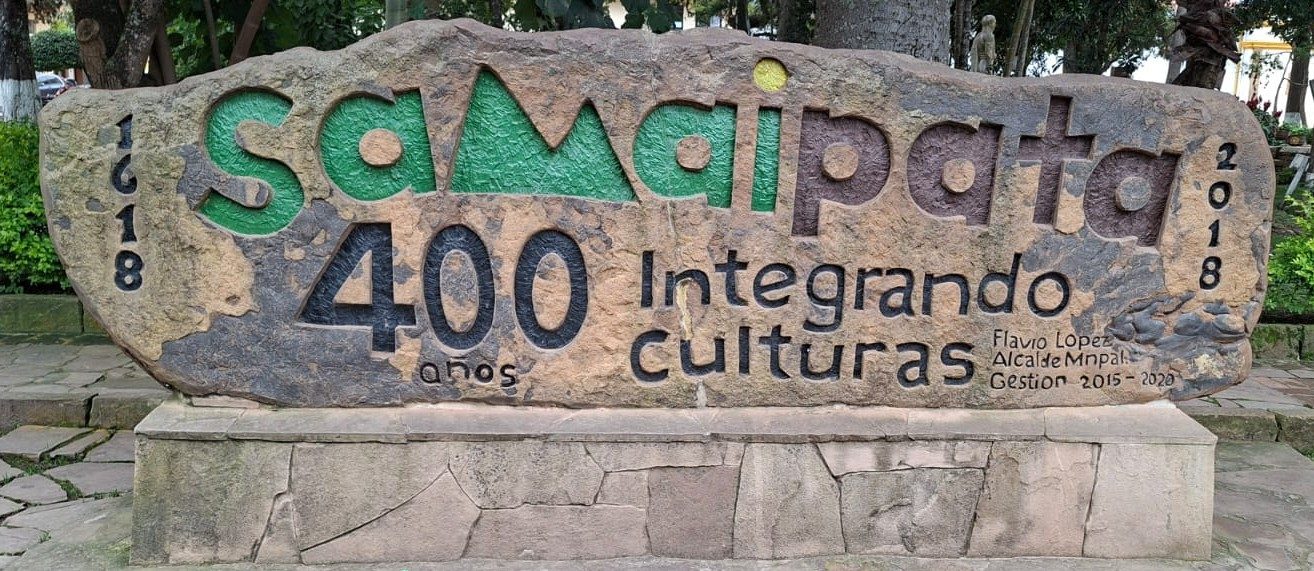
Samaipata, Bolivia, population about 13,000, sits at an elevation of 1640 meters (5380 feet). The town is built around a central plaza and sits in the mountains. The town was founded in 1618 with the name "Ciudad del Valle de la Purificación de la Santísima Virgen" which means, "City of the Valley of the Purification of the Blessed Virgin." It had been known as Castilla during the Colonial period. Maybe the Blessed Virgin was purified, but their water certainly isn't - don't drink the water, you'll be sorry.
Some websites say that this site has the “World’s largest petroglyph.” But that is probably better phrased as “one of the world’s largest carved rock monuments” or “often described as the largest carved rock in the world.” “Petroglyph” can be too narrow here, as well, because the site includes channels, niches, animal figures, terraces, and architectural remains, not just rock drawings. UNESCO says the red sandstone monolith is about 220 meters long and 60 meters wide.
Coffee shops and more where English is Spoken
The town is quite pleasant. It's quiet, and the people are friendly. There are lots of places to stay, hosterias, lodging. Another coffee shop, called Café Tango, run by a very nice woman named Sol, is an excellent place to get your cup of joe. It's also a vegetarian food restaurant and she sells many kinds of scents and lotions and potions and honestly, I don't know what all those little bottles have in them. But it's a very nice shop located in the main tourist pedestrian street across from the main plaza. And she has her own coffee, as well. If you visit Samaipata, you have to visit Sol.
The coffee shops sell coffee grown in the Bolivian Andes. Another shop, Os-Kar Café, is owned by a family farm that includes 7 varieties of coffee beans, some of which have been award-winning coffee, and fruit orchards. Their shop is run by one of the daughters, Karen, and she speaks very good English. I found two other coffee shops with English-speaking baristas. With that said, the geisha variety of Arabica coffee (which is the best tasting of the wide varieties) grown here in Bolivia is not comparable to the Geisha grown in Colombia. Not even to that of Perú. Maybe it was the preparation, or maybe my taste buds have been spoiled by Colombia and Perú, but the Bolivian geisha I tried here didn’t come close to the better cups I’ve had elsewhere.
Things to See and Do
I hiked up to one of the viewpoints; there are several on the surrounding hills. This one I went up to starts on a paved road in town and goes basically straight up the front of the hill. The road goes from pavement to dirt/gravel to very rocky/bedrock. And it gets quite steep. The rocks provide stair steps for the top section of the climb. And the view from up there really is nice. The entire valley is spread out in front of you. There are pics in the photo album.
There are many opportunities for hiking in the area around Samaipata. Many tourists, and I spoke with a bunch of them during my month here, come for the hiking. They get a taxi to the trailheads, do the hike, then call for a taxi to pick them up. Sometimes the driver will wait for you during your hike. I guess it's a matter of how much you want to pay.
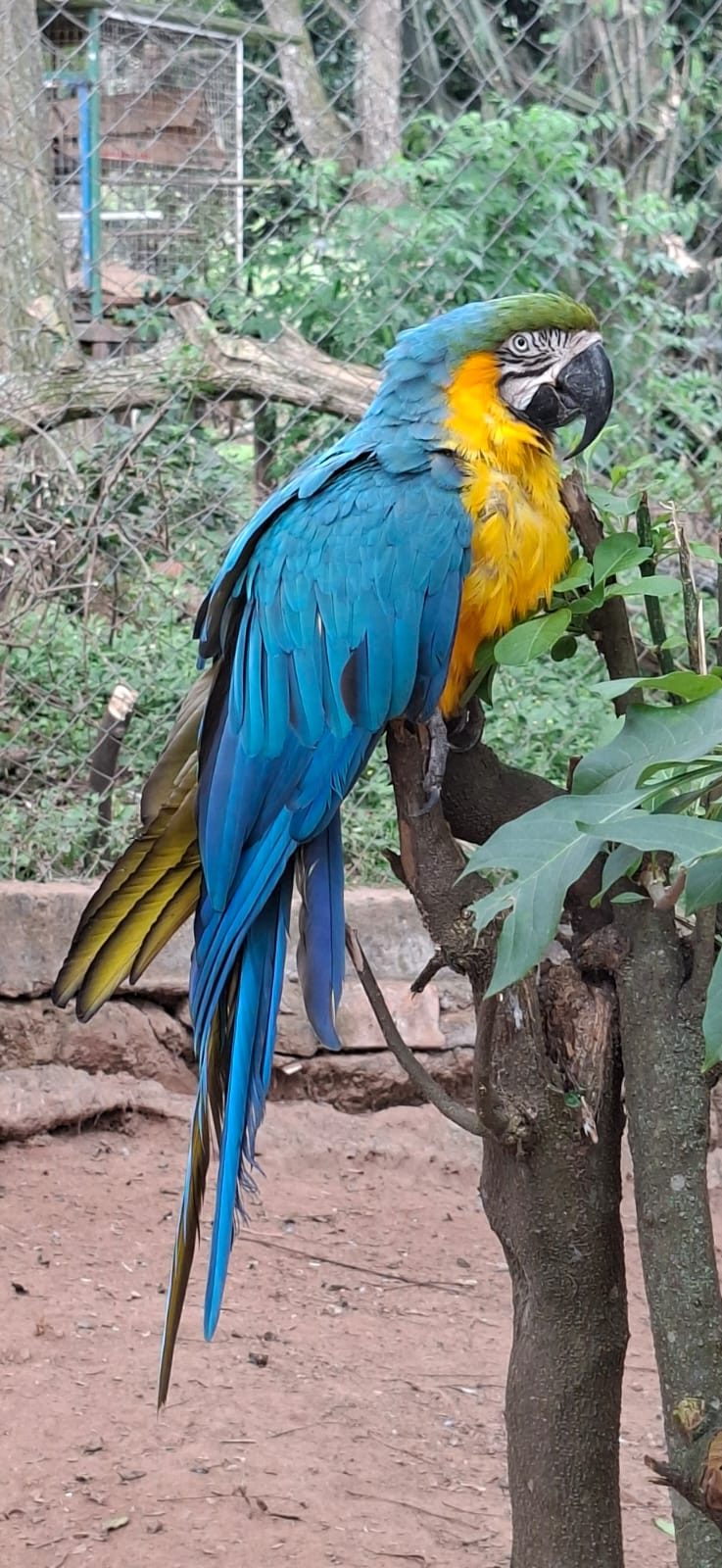
About 2 kilometers (miles) from the town center is a small zoo. It's actually more of an animal refuge. 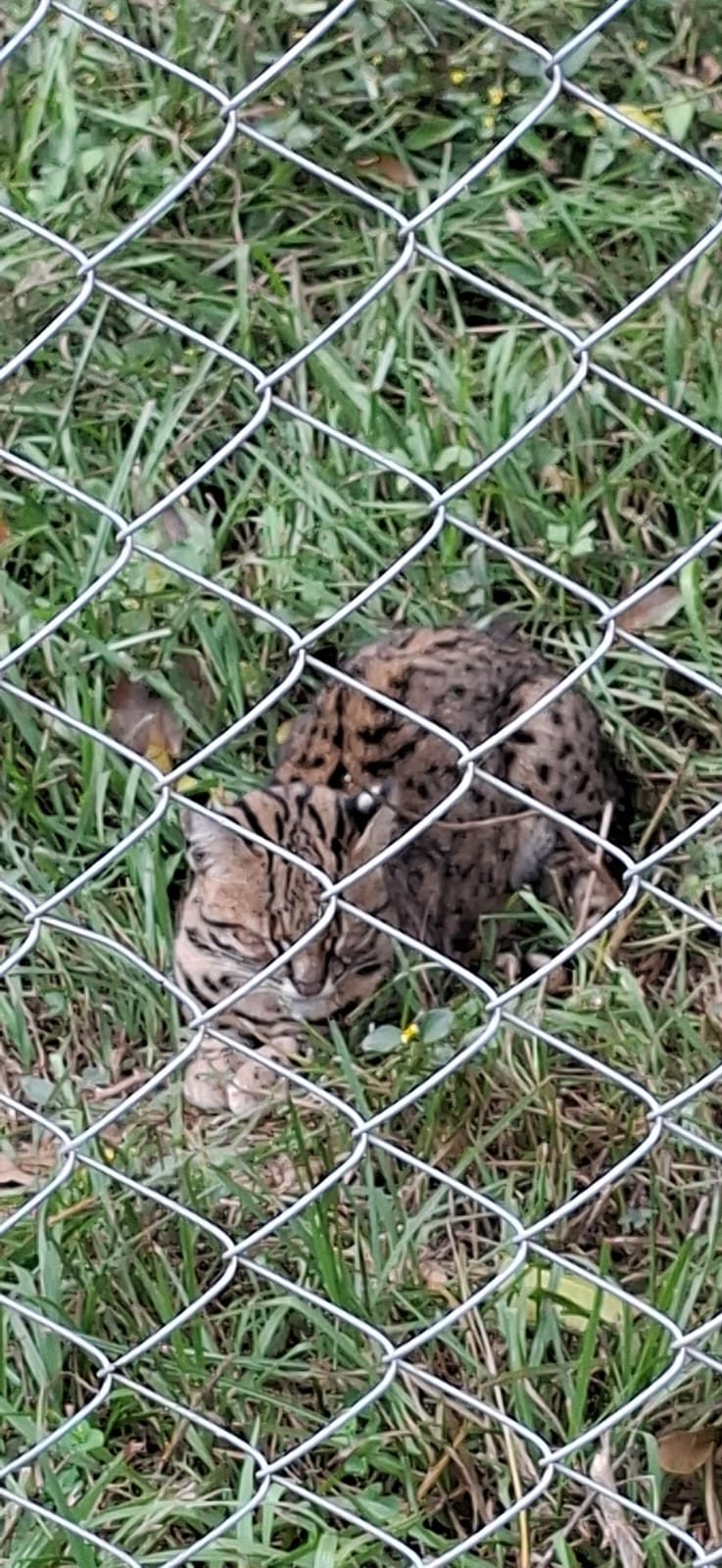 They have quite a few aviaries with a variety of birds, including 4 common types of parrots - Blue-and-yellow (blue-and-gold) macaw — Ara ararauna; Scarlet Macaw — Ara macao; White-cheeked Macaw; and Military Macaw — Ara militaris.
  They also have a deer-like animal called Pudú. A Tapir. Some capybaras. Several ring-tailed coatis (Nasua nasua). A bunch of turtles. And 3 wildcats, one in a cage by itself, probably a margay. One was an Ocelot, another the sign called Gato Montes, but that can refer to three different cats. The third by itself had no plaque, but it looked somewhat similar to the other two. Those wildcats are beautiful, but not at all friendly. These little cats look like someone shrank a leopard and gave it innocent eyes, but they are still wild predators with claws, teeth, speed, and a firm dislike of tourists poking fingers through fences. There's even a secondary fence about a meter away from the cage—to keep those little fingers out of the cage and the cat's mouths. The refuge is a pleasant place to visit, though it does need some maintenance, mostly in the children's playground.
One of the biggest draws to Samaipata is El Fuerte. It's not actually a fort, per se, but it is an archaeological site that dates back to the pre-Inca ages. It's also a UNESCO World Heritage Site. Worth a visit if you visit Samaipata. It's a 20-minute drive outside of town; walking to it is possible, but would take at least two-and-a-half hours due to the uphill climbing of the road. It's an interesting place—not really a fort, but still interesting. One thing I didn't like was that the workers are putting cement in some of the ancient walls to hold them together, thus ruining them. They no longer look ancient with that cement mortar. That's a sad thing to see. There's a trail that goes off to a well and ends there; don't bother with that trail. The well is nothing special to see and has dirty water at the bottom. Was it worth the entry price of 50 Bolivianos (US$7.22) plus the taxi of 120 Bolivanos (US$17.33)? For one visit, yeah, but I won't go back.
Samaipata compared to Pisac, Perú
Before I arrived here, I had heard this town is a bit like Pisac, Perú, which is widely described as a spiritual, yoga, alternative-lifestyle hub. In Pisac, you'll find accommodations that focus on wellness with yoga sessions, meditation gardens, and organic meals. But that town is also almost exclusively focused on tourists. Here in Samaipata, there is a fraction of that, much less than I was led to believe, thankfully. There is one street, one block long, with people selling beaded bracelets, necklaces, handicrafts, and so on. Other than that, there are some tourists here for the tourist sites outside the town. In Pisac, you'll find bulletin boards filled with notices about all kinds of holistic/natural-whatever classes/and on and on. Here in Samaipata? One bulletin board with one notice for massages, and a second notice from a realtor. Samaipata does have tourism, but it's not reliant on it, and it's not built around it. Samaipata is pleasant, scenic, and tourist-friendly, but not swallowed by the spiritual-tourism machine like Pisac.
My Impressions
The town of Samaipata is a nice place to visit. They have a couple of expensive restaurants and a few quite good ones, and many other typical restaurants. There's pretty much everything you would need, just no supermarket. But with two mercados and the local shops, you'll find what you're looking for. I even found cartridges for my Mach 3 razor, which was quite a surprise for a town this size. The town is clean with very little litter, the town plaza is quite nice. But there are too many street dogs in this town. But that is common throughout all the towns I've visited in Bolivia. The people here are friendly, and you'll find quite a few business people who speak English. So, if you visit Bolivia should you visit Samaipata? If you enjoy hiking or artisan handicrafts, yes, it would be a worthwhile stop for a day or two.

I used to teach English as a foreign language in Barranquilla, Colombia. Now I'm retired and traveling throughout South America.
I'm from Kennewick, Washington, USA. In my previous life, as I call it, I was an IT guy, systems administrator, computer tech, as well as a shipping/receiving guy and also worked as a merchandising guy in a RV/Camping store.