My Books on Amazon






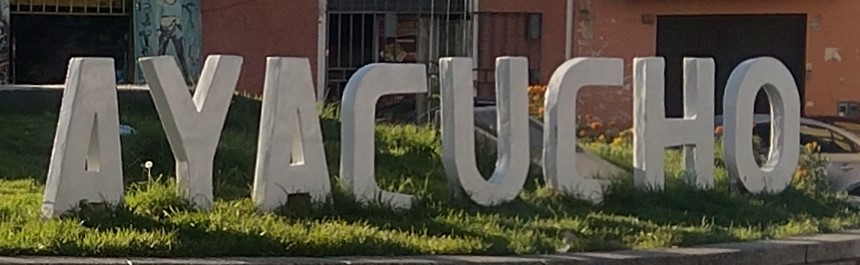
Ayacucho, Perú, Perú: A City of Hidden Courtyards and Colonial Echoes
March 31, 2026
Ayacucho, Perú – Behind the Doors of a 400-Year-Old City
Ayacucho, Perú, sits at about 2,761 meters (9,058 feet) elevation in the central Andes. The city lies in a broad valley surrounded by dry mountains and enjoys a mild, sunny climate for most of the year. With roughly 100,000 residents in the city itself and a larger metropolitan area approaching 230,000, Ayacucho feels like a mid-sized Andean city that has managed to preserve much of its colonial character while still being very much a living, working place.
Reference: Wikipedia
For visitors traveling through southern Perú, Ayacucho offers something different from the well-known tourist hubs like Cusco or Arequipa. Here, the old architecture and narrow streets exist alongside everyday life rather than being preserved mainly as tourist attractions. Walk a few blocks away from the central plaza and the city quickly reveals quiet passageways, old stone houses, and long adobe walls that have likely stood for centuries.
This city is full of centuries-old houses and other buildings, and not just in one "historic district," but throughout the entire city. If you spend any amount of time walking the neighborhoods, you'll see homes and buildings going back to the 16th century. Walking this city is often an experience in walking through the 1600s, 1700s, and 1800s. My photo album is filled with pictures of the neighborhoods, not just the tourist sites.
A City with Deep Andean Roots
Long before the Spanish arrived in the Andes, the region around present-day Ayacucho was the center of one of the earliest major Andean civilizations: the Wari (also spelled Huari) culture. Between roughly 500 and 1100 AD, the Wari established what many historians consider the first true empire in the Andes. Their capital city, located about 20 kilometers northeast of modern Ayacucho, may have had a population exceeding 50,000 people at its peak.
Reference: Wikipedia
The Wari civilization spread architectural styles, crafts, and administrative systems across large parts of what is now Perú. Even today, the archaeological remains of Wari settlements can still be found throughout the region, reminding visitors that the story of Ayacucho did not begin with the Spanish conquest.
After the Wari declined, the region became home to several indigenous groups, including the Chancas, who were powerful rivals of the expanding Inca Empire before eventually being defeated by the Incas during the reign of Pachacútec in the 15th century.
Reference: Wikipedia
The Spanish Founding of Huamanga
The modern city traces its origins to the Spanish colonial period. In 1539, the conquistador Francisco Pizarro ordered the founding of a new city called San Juan de la Frontera de Huamanga. The location was chosen for strategic reasons: the Spanish needed a secure settlement along the route connecting Lima and Cusco and wanted a base from which to control the surrounding territory.
Reference: Britannica
The first site selected for the settlement proved unsuitable, so the city was moved and re-established nearby in 1540. From there, Huamanga gradually grew into an important colonial administrative and commercial center. Wealth generated by regional agriculture and trade financed the construction of churches, monasteries, and large courtyard homes that still define the city’s historic character today.
Reference: Wikipedia
The Colonial City
During the 17th century the city flourished. Churches, convents, and impressive stone houses were built throughout the growing settlement. The wealth of the period also supported a thriving artistic tradition, including painting, metalwork, ceramics, and stone carving.
Reference: Wikipedia
One of the most striking aspects of Ayacucho’s architecture is the abundance of colonial religious buildings. Locals often say the city has thirty-three churches, symbolically representing the thirty-three years of Christ’s life. Whether the number is exact or not, it reflects how deeply religion shaped the city during the colonial era.
Reference: Wikipedia
Beyond the churches, the historic center contains many traditional patio houses. From the street, these buildings often appear modest: thick adobe walls, a heavy wooden door, and little else. Step inside, however, and they frequently reveal interior courtyards surrounded by rooms and wooden balconies. This architectural style, introduced by the Spanish but influenced by earlier Mediterranean traditions, became the defining layout of colonial homes throughout Latin America.
The Battle that Changed a Continent
Ayacucho is also remembered for one of the most important events in South American history. On December 9, 1824, the nearby Pampa de Ayacucho was the site of the Battle of Ayacucho, a decisive confrontation between Spanish royalist forces and the independence army led by Antonio José de Sucre.
Reference: Wikipedia
The patriot victory effectively ended Spanish colonial rule in South America. In recognition of this historic event, the city was later renamed Ayacucho in 1825. The name comes from the Quechua words aya (soul or death) and k’uchu (corner), often translated as “corner of the dead.”
Reference: Britannica
A City That Still Feels Authentic
Today, Ayacucho remains one of Perú’s most culturally rich yet relatively under-visited cities. Its historic streets still contain many colonial houses, narrow passageways, and stone doorways that date back centuries. The city is also widely known as the “Capital of Popular Art and Crafts of Perú,” reflecting its long tradition of artisan work such as retablos, textiles, ceramics, and stone carving.
Reference: Wikipedia
A City of Churches You Don’t Have to Look For
Ayacucho is often described as having 33 churches, one for each year of Christ’s life. That sounds like a tourist statistic until you start walking the streets.
I wasn’t looking for them.
I found them anyway.
One tucked between houses on a quiet street. Another at the top of a hill. Another behind an arch. Some are large and obvious, others are so integrated into the neighborhood you could walk past without realizing you were standing in front of something built in the 1500s.
By the time I left, I had photographed at least half of them. Some dated back to the earliest years of the Spanish presence—Templo La Merced from 1540, San Juan de Dios from 1555—while others came later, filling out the city through the 1600s and 1700s.
They aren’t museum pieces. They’re part of the city’s daily life. Old churches were built over a period of decades, so the years above are typically the year of completion. Sometimes, a church gets destroyed and rebuilt, and sometimes it can be rebuilt several times.
Below is a list of the churches I found and have pictures of in the photo album.
1500s (the heavy hitters… earliest colonial layer)
These are the foundation-era builds, right after the Spanish arrived:
- Templo la Merced – 1540
- Iglesia San Juan de Dios – 1555
- Templo de Santa María Magdalena – 1588
These are early colonial. You’re basically looking at first-generation Spanish construction in the Andes.
1600s (expansion phase)
This is when the city really filled out:
- Templo de la Campana de Jesús – 1605
- Templo San Agustín – 1637
- Templo de Belén – 1648
- Catedral de Ayacucho - 1672
This is peak colonial growth. The city is no longer a foothold… It’s established.
Many of Ayacucho’s churches date back to the 16th and 17th centuries, though exact construction dates are not always clearly documented. Like much of the city, they have been built, rebuilt, and adapted over centuries.
1700s (refinement)
- Templo de Soquiaqata – 1700
- Iglesia San Francisco de Paula – 1713
These often show slightly different styling, sometimes simpler, sometimes more regional influence.
Date(s) of construction are unknown for the following -
- Iglesia de Carmen Alto - Likely 1600s–1700s
- Iglesia de la Amargura
- Iglesia del Arco (Virgen del Pilar) - Likely 1700s
- Iglesia San Cristóbal - Very likely 1500s–1600s
- Templo de Santo Domingo de Guzmán - Very likely 1500s–1600s
- Templo el Calvario - Likely 1600s–1700s
- Templo de Buena Muerte - Likely 1600s–1700s
- Templo de Santa Teresa - Likely 1600s–1700s
- Templo Pampa San Agustín - Likely 1600s
- Templo Santa Ana - Very likely 1500s–1600s
So, how did I find all of these? After all, there's no map showing their locations. I walked. A lot. All over the city, through the neighborhoods. This is what I found: They’re not grouped neatly, or organized in any particular layout throughout the city; They can be in neighborhoods; Some are major landmarks, while others feel like you just turned a corner and bam… 1600s church.
For travelers exploring the Andes beyond the usual tourist routes, Ayacucho offers a rare chance to walk through a place where layers of Andean, colonial, and modern history coexist quietly within the same streets.
And sometimes the most interesting parts of the city are not the plazas or monuments, but the narrow lanes and heavy wooden doors scattered throughout the neighborhoods. Behind many of those doors are hidden courtyards, gardens, and homes that have been standing here for three or four centuries, quietly witnessing the long story of the Andes unfold around them.

I used to teach English as a foreign language in Barranquilla, Colombia. Now I'm retired and traveling throughout South America.
I'm from Kennewick, Washington, USA. In my previous life, as I call it, I was an IT guy, systems administrator, computer tech, as well as a shipping/receiving guy and also worked as a merchandising guy in a RV/Camping store.