My Books on Amazon






3 Towns between Salta and Corrientes, AR
July 17, 2026
Joaquín Víctor González
Joaquín V. González, Argentina, is located in north-central AR. It's a small town of about 21,000 people. This is an agricultural town. The local economy is based strongly on soy production, forestry exploitation, and cattle ranching. The town has a couple of banks and a half-dozen or so ATMs, but when I was here over a weekend, at least four of them were out of cash. There's also a casino, a modern supermarket, and a bus terminal. There are a few hotels and other accommadations. There are a couple of plazas and a couple of other parks. The town is flat as a pancake and can be easily walked, as in pretty much all of it, in a couple of hours.
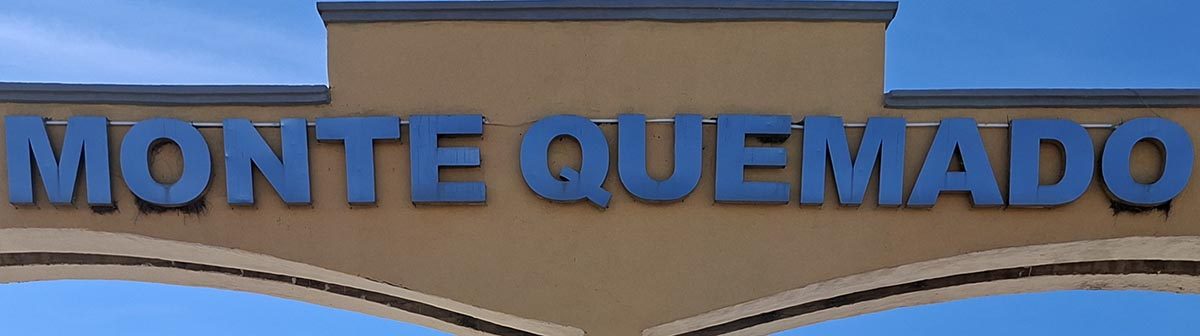
Monte Quemado
Monte Quemado is a couple of hours' drive east of Joaquín V González. This little town has a population of around 13,000. The town is flat as a pancake. There is no real town center, not even around the main plaza. Though there is a small church on one side of the plaza, the rest is either very small businesses or residential. Along the highway, on the side of the town, is where you'll find more businesses, but really, there's not a lot here. That means this town is quiet. It's quite nice, actually. But then, I don't like the noise and pollution of cities, so these little towns appeal to me.
El Impentrable is a big area of almost impossible-to-pass-through forest. The Amazon can be brutally dense, but it often has more vertical layering: tall canopy, understory, vines, palms, gaps, trails, river edges, and old human paths. The dry Chaco region and El Impenetrable can look lower and less dramatic, but be nastier to move through because it is basically a wall of low, tangled trees; thorny shrubs; cactus-like plants; hard dry branches; vines; deadfall; dust; heat; and very limited water. So instead of “jungle” in the green, wet, towering sense, it is more like hostile scrub-forest. Not romantic. Not cinematic. More like nature built a barbed-wire fence and forgot to stop.
Sáenz Peña
Sáenz Peña, the formal name being Presidencia Roque Sáenz Peña, is a town of about 90,000 people. When I left Salta and headed for the pueblos between there and Corrientes, I expected a series of small towns, and the first two (above) were indeed very small. Sáenz Peña is not a small town; it's almost a small city. This caught me by surprise, and pleasantly so. Those above two town's have very few options for accommodations, and the options they do have are definitely on the very-low budget side of the spectrum. In SP, I found a really nice hotel with great rooms and a very reasonable price, so I paid for three nights here. Like all of these towns along Route (Highway) 16, it's only around one hundred years old. This one was founded in 1912. And like all the others, it's dependent on agriculture and cattle, but this town also has a fairly well-developed light industry sector. The other two above, and the other similar-sized towns, have no such thing; they're basically villages or very small towns.
The climate is quite nice. The daytime highs range from 21° C (71° F) to 34° C (93° C) and the nightly lows range from 8° C (47° F) to 20° C (68° F). The humidity varies between mid-60s to mid-70s percent.
Of these three towns I've visited in the north-central region, in the Province of Chaco, this is the one to visit for an overnight visit. Skip the others. But like all of Argentina, pretty much all business shuts down at 1 pm and restarts at 4 or 5 pm. Dinner starts, and most restaurants open, at 8 pm. If you're accustomed to a 6 pm dinner, as I am, you'll have a hard time finding a restaurant serving anything other than meriendas (snacks). That would be sandwiches, occasionally pizza by the slice, and pastries. I usually start walking around town at 5:30, hoping to find a restaurant serving something like dinner by 6. In the small towns, your only hope is a hotel that has a restaurant and serves the public at that hour - few do. In Joaquín V. González, there was one option for a 6 pm meal - a restaurant at the edge of town across from the gas station. In Monte Quemado, the only option was the very low-budget hotel, Hotel 9, with its own little restaurant, and they served at 6 pm. But here in Sáenz Peña, you'll have a few more options. Still limited, but better than the other two towns. So, in the end, of the towns between Corrients/Resistencia and Salta, this is the only one worth stopping in. There's nothing here for tourists, but that's normal everywhere in this part of Argentina. There is a cafeteria called Martinez Coffee across from the main plaza. One of the employees speaks English quite well. He learned while living for a while in New Zealand and visiting a few other countries. So, if you want to break up the long 8+ hour drive, stop in Sáenz Peña and buy a coffee at the Martinez Coffee shop. Oh, and this one actually will prepare proper coffee - a French-press coffee if you ask.

I used to teach English as a foreign language in Barranquilla, Colombia. Now I'm retired and traveling throughout South America.
I'm from Kennewick, Washington, USA. In my previous life, as I call it, I was an IT guy, systems administrator, computer tech, as well as a shipping/receiving guy and also worked as a merchandising guy in a RV/Camping store.