My Books on Amazon






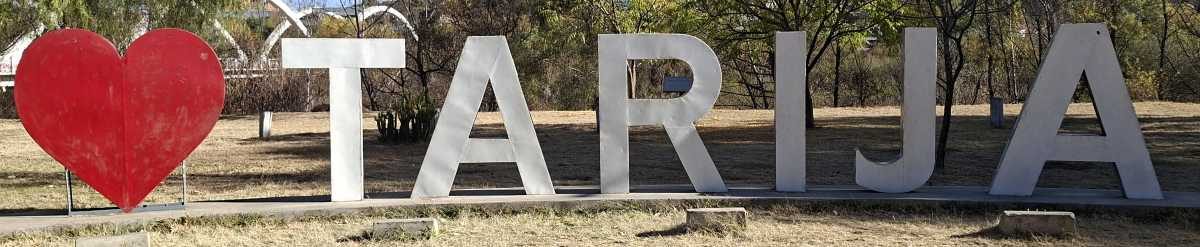
Tarija, Bolivia - One of Three Cities in Bolivia I kind of Like
July 7, 2026
Tarija, Bolivia was founded in 1574. It's a small city of around 240,000 people. The climate is nice if you like spring-like weather year-round. The afternoon temps generally range in the 20s° C (low-70s° to low-80s° F), with the nightly lows generall in the single-digits to the mid-teens (mid-30s° to mid-50s° F). The city sits at 1854 meters (6083 ft) which accounts for the cold nights. When the sun sets the temp drops quickly.
From a Pre-Inca population to no population and back again
The region has been populated since pre-Inca years. Then the Incas came in and dispersed the Churumata and other peoples into Chile and Argentina. The Spanish arrived in 1539. When they arrived, the local people, the Suares tribe fled back to their homeland. That meant that by the time the Spanish founded Tarija, it was basically people-less, depopulated. So, the Spanish relocated the Tomata people to Tarija.
Wine, coffe, and tree-lined streets
Tarija sits in Bolivia's wine country and all throughout the downtown area you'll find many wine & cheese shops. There are also many coffee shops and ice creams shops. The main plaza doesn't have a cathedral at it as is common throughout Latin America. And the second plaza also has no church at it. The main church is several blocks away and slightly uphill from downtown. The city streets have many trees lining them, especially in the neighborhoods. Not quite to the extent of Mendoza, Argentina, but still a lot of trees through out the downtown area. That's make walking much more pleasant. Though, it is a city so you have the stink of the of the traffic. Which I found particularly offending when I was eating dinner at a sidewalk table.
A riverside park actually worth walking
The city has the Guadalquivir River running through it. They've done a nice job of making the entire riverfront either park or green space, with no businesses at all fronting the river. Of the twenty-plus cities I've visited in Bolivia, this is one of three that I actually like. But would I choose to live here? No, because it's in Bolivia. And here in Bolivia you won't find drinkable water at the faucet; you will find electricity cuts frequently, and lousy internet access; and hotel wi-fi was frequently connected but unusable, often failing to load even simple webpages. More often than not, turning off Wi-Fi and tethering to my Tigo phone provided a faster and far more reliable connection. After nearly three months and many different hotels, it became a consistent part of daily life.
My Impressions
While Tarija is certainly a pleasant small city to visit, I couldn't live here. The nights are too cold, the tap water is not drinkable (as is the case throughout Bolivia), the internet access is too inconsistent. And for me, it's too big. The last think I want to do when walking through a city center is breath diesel fumes. And that is common throughout all the cities I've visited, but not so much in the towns. So, should you put Tarija on your list of places to see in Bolivia? No, there's nothing here for tourists. The tourist locations are hours away and high in the Andes.

I used to teach English as a foreign language in Barranquilla, Colombia. Now I'm retired and traveling throughout South America.
I'm from Kennewick, Washington, USA. In my previous life, as I call it, I was an IT guy, systems administrator, computer tech, as well as a shipping/receiving guy and also worked as a merchandising guy in a RV/Camping store.