My Books on Amazon






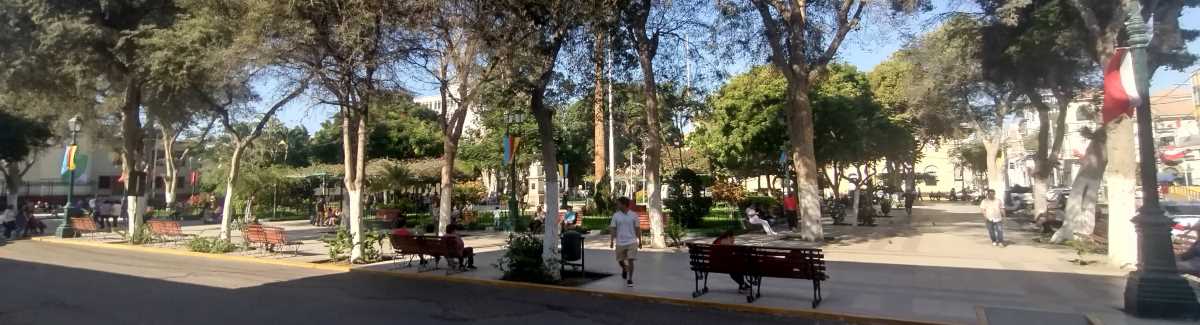
Piura, Perú
August 8, 2025
Piura, on the northern coast of Perú, has a population of around 600,000. This was my second visit to Piura and I wrote a blog back in January 2023 of my first visit, and it includes much of the the history, so I won't repeat that this time. The city was founded in 1532 with the name "San Miguel de Tangarará," by Francisco Pizarro.
Admiral Miguel Grau and The War of the Pacific
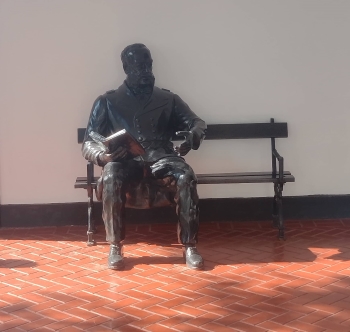
This time during my two days here I visited the Gran Almirante (Great Admiral) Grau House Museum. This is the house where Miguel Grau was born, in 1834. Miguel Grau grew up in this house then when he was only 10 years old joined the navy. For those of you outside of South America you've probably never heard of him. He was an admiral in the Peruvian Navy during the War of the Pacific. The War of the Pacific, was fought between Chile, Peru, and Bolivia from 1879 to 1884, and was a conflict primarily over control of the Atacama Desert's nitrate-rich territories. Chile emerged victorious, gaining significant territory from both Peru and Bolivia. Miguel Grau is considered El Caballero de los Mares (“The Gentleman of the Seas”) and is one of Peru’s most beloved national heroes - not because he won the War of the Pacific (he didn't), but because of how he fought and conducted himself in it. His hero status is tied to a mix of naval brilliance, extreme bravery, and remarkable humanity, even toward his enemies.
-
What he did during the war
Grau was a Rear Admiral and commander of the Huáscar, a Peruvian ironclad monitor (small but heavily armored warship).
At the start of the war in 1879, Perú and Bolivia were allied against Chile, which had a larger, better-equipped navy.
Despite being outgunned, Grau used the Huáscar in a seven-month campaign of daring coastal raids, disrupting Chilean supply lines, capturing transports, and repeatedly slipping away from larger fleets. Chile had to divert major resources just to hunt him.
-
The Battle of Iquique & his character
On , at Iquique, the Huáscar fought the Chilean corvette Esmeralda, commanded by Arturo Prat. After a fierce fight, Grau rammed and sank the Esmeralda.
What made him legendary was what he did afterward:
- Rescued surviving Chilean sailors from the water at personal risk.
- Returned Prat’s sword and effects to his widow with a letter praising Prat’s bravery.
- Showed consistent respect for fallen enemies, rare for the time.
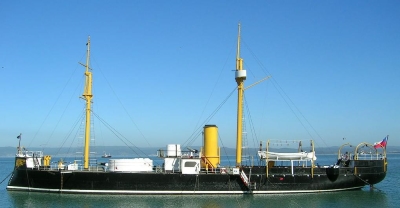
The Huáscar is preserved as a museum ship in Talcahuano, Chile. The original Esmeralda lies on the seafloor off Iquique. Chile leaves the site undisturbed as a memorial. In Iquique, you can tour a full-scale museum replica of the Esmeralda, built from the original plans of the first Esmeralda. The fully-restored Huáscar can be toured in Talcahuano.
-
His continued naval campaign
For months after Iquique, the Huáscar harassed the Chilean navy, even in their waters.
Grau’s hit-and-run tactics became a textbook case, earning respect from both Peruvians and Chileans. Newspapers dubbed him El Caballero de los Mares (The Gentleman of the Seas) for fighting fiercely yet fairly.
-
His death and martyrdom
On , at Angamos (just north of Antofagasta, Chile), the Huáscar was trapped by Chilean ironclads. A shell exploded on the bridge, killing Grau instantly. His death dealt Perú a heavy blow and sealed his status as a national hero.
Even though Perú lost the War of the Pacific, Miguel Grau is celebrated because:
- Bravery against impossible odds - he tied down a superior fleet for months.
- Chivalry in war - humane treatment of enemies in a brutal conflict.
- Symbol of integrity - proof you can fight fiercely yet honorably.
Miguel Grau didn’t win the War of the Pacific; he won something rarer, lasting respect. Commanding the Huáscar, he stymied a stronger navy with audacious raids, sank the Esmeralda at Iquique, and then stunned the world by honoring his fallen foe. Killed at Angamos, Grau became Perú’s enduring model of courage with conscience: a warrior who fought hard, kept his word, and treated enemies as men, not targets. Just about every city and town of any size in Perú has a sculpture or bust of Miguel Grau in a park or plaza. The bigger cities and towns have multiple such tributes.
Personal Reflactions
Yesterday, I visited the Museo Tumbas Reales de Sipán, for the second time. Back in March, 2024, I was in Lambayeque, and I visited this museum but they were doing some major upgrades to the air-conditioning systems so the main building was closed. Anyway, I finally got to visit the main museum, photos in the photo album, and it was very interesting. But, when I was leaving, just outside the gate, a dog decided it wanted to attack me for no reason. It bit my pant leg, ripped it quite a bit, and then I kicked it across the entry a good 2 or 3 meters. I chased it but it ran away. As I complained to the people standing around watching, and I asked them if that dog belonged to any of them, they all said no, a Museum security person chased the dog away with a shovel. The good thing is the dog's teeth did not cut my leg, the bad part - being that I'm backpacking I have limited clothing, and that means two pairs of long-pants. Now one pair, plus two pairs of cargo shorts. I'm going to have to settle in one place in Ecuador for a month so I can order another pair of pants online, and wait at least 3 weeks for delivery.
I left Lambayeque this morning, and am now in Piura, as mentioned at the top of this blog. Piura, its a medium-sized city, has the typical traffic congestion you expect, and too many of those stupid moto-taxis (the 3-wheel motorcycles called put-puts in Asian countries). I hate those things. They're air- and noise-pollution machines. The whole world needs to outlaw them and have them all recycled into something, anything, useful. There are only two things I can think of for which I can honestly use the word "hate" - those 3-wheel air- and noise-pollution machines, and dogs. Before starting this backpacking journey I didn't mind dogs, I wouldn't ever own one, but for other people, okay, I could put up with them. But now, after 2 1/2 years of backpacking and fending off dogs, and now two pairs of ruined pants, I can honestly say I have developed a hatred for the animals. And, I won't say "I'm sorry if you don't like that," because I won't say that. If you don't like what I wrote, that's your problem, not mine, and I'm not sorry about it.
From here, I am heading into Ecuador. This time, when I entered Perú, the border person gave me only a 60-day entry stamp. I guess I've been through the country too many times in the last 2+ years, I don't know. Anyway, I'll be heading into Ecuador, first Catamayo then Loja, and then visiting a lot of towns on the east side of the Andes. So, I hope you'll continue visiting my site and are enjoying my blogs.

I used to teach English as a foreign language in Barranquilla, Colombia. Now I'm retired and traveling throughout South America.
I'm from Kennewick, Washington, USA. In my previous life, as I call it, I was an IT guy, systems administrator, computer tech, as well as a shipping/receiving guy and also worked as a merchandising guy in a RV/Camping store.