My Books on Amazon






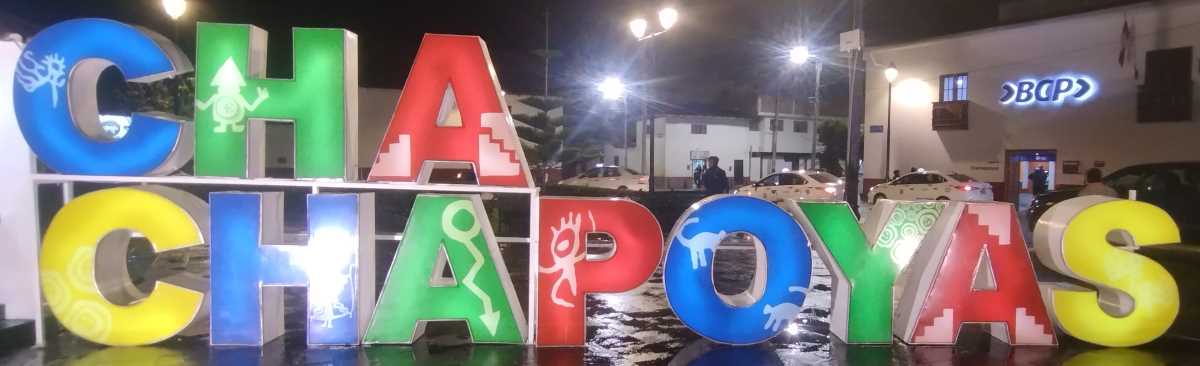
Chachapoyas, Perú
July 30, 2025
Chachapoyas, Perú is a town and district in north-central Perú in the Andes Mountains, in the part of the mountains called the Amazonian Andes. The district has a population of around 40,000. The town sits in a valley at 2,335 meters (7,660 feet). It's a bit on the cold side at this elevation, especially at night, too cold for my bones. The town has a very long history, but its official founding was in 1538 by the Spanish conquistador Alonso de Alvarado. Prior to that, the location had shifted several times due to climate, disease, or lack of defensibility.
From around AD 800 until the Inca conquest in the 1470s, the Chachapoya flourished in a mix of small kingdoms (cacicazgos), bridging the Andes and the Amazon. At their height, they may have numbered around 500,000 people. The native Chachapoya were eventually conquered by the Incas = then, only a few decades later, the Incas were conquered by the Spanish. No written language of the Chachapoya survives. Everything that is known comes from cliff-side tombs, sarcophagi, pottery, fortified citadels, and museum-preserved quipus*. This lack of records makes it one of South America’s most enigmatic cultures, each ruin is a clue lost in the mist. They used cliffs to enshrine their dead: colorful sarcophagi perched on narrow ledges, miniature mausoleums carved into caves, or adobe structures pressed against rock faces. These funerary styles differ dramatically from Inca crypts. Some of these sarcophagi can be visited at archaeological sites around the region.
* quipu - A quipu (also spelled khipu) is an ancient Andean recording system made of knotted strings—basically, a memory aid that looks like a tangle of colorful yarn spaghetti with a purpose.
The Incas used quipus, and possibly cultures before them like the Chachapoya, to record numbers, dates, taxes, census data, and maybe even stories or historical events. The strings were often made from cotton or llama wool, dyed in various colors, and knotted in specific ways to represent information. The position, type, and direction of the knots all had meaning. Think of it like a combination of an abacus, a spreadsheet, and a ledger—made from string.
Researchers still debate whether quipus included a form of written language beyond numbers. So far, math? Definitely. Stories? Maybe. We’re still decoding that mystery.
So when you see “museum-preserved quipus” in Chachapoya or Inca contexts, you’re looking at one of the most unique information systems ever created—basically, a portable hard drive for a civilization without a written alphabet.
The town still has the original central plaza laid out during its founding—measured precisely at 100 meters square. Many buildings and homes are easily hundreds of years old, especially in the city center. The town is nicknamed "The White City," and for good reason - nearly every structure in the center is painted white, and much of the surrounding residential area follows suit.
One thing I noticed immediately upon arriving: Chachapoyas is unusually quiet. There are no moto-taxis—the noisy, three-wheeled motorcycles that buzz through so many other Peruvian (and in Ecuador and Colombia) towns. In fact, the number of motorcycles in general seems surprisingly low here. And get this - no horn-honking. I could count on one hand the number of times I’ve heard a car horn, and even those were just light taps. It makes for a more peaceful, less chaotic atmosphere. You actually hear the wind, the birds, the conversations in the plaza. It’s a small but refreshing detail that sets Chachapoyas apart from most other cities in the country.
The area around Chachapoyas is loaded with archaeological sites. According to a BBC documentary from 2013, only about 5% have been excavated. I visited the Fortaleza de Kuelap, built in the 6th century AD, long before Machu Picchu. It sits at more than 3,000 meters elevation (compared to Machu Picchu, built in the 15th century and sits at 2430 meters). The site includes the original fort structure and more than 400 circular house foundations, some with walls still several meters high. It’s very impressive. I’ve included many photos in the album. The site is still an active archeological site, they are still excavating, discovering more ruins, and doing some reinforcing work on some of the forts walls. There is a daily limit on the number of visitors, so if you plan to visit Kuelap, it’s highly recommended to reserve in advance with a tour group. I joined a group through the hostel where I stayed.
At the western edge of town is the hill Luya Urqu (Luya Urco). On the hillside is the Well of Yana Yaku (Pozo de Yanayacu), originally known as the Fuente Cuyana. The well was built at the spot where, according to legend, Santo Toribio de Mogrovejo brought forth water from a rock to end a regional drought. Another legend says any man who drinks from its waters will be forever enchanted by the charm of the city’s women. Or so the story goes - because today, there’s no water. The well is dry. What’s left is a bit of litter, empty bottles and paper scraps, thrown in by careless visitors. The site hasn’t seen maintenance in many years. Note: If you see references to "Cuyana Fountain," know that it’s more commonly called Pozo de Yanayacu. Although Google Maps merges the two names, and Wikipedia treats them as separate entries, they refer to the same location.
There are many archaeological sites around Chachapoyas that don’t appear on Google Maps. But in hotels and hostels you’ll often find large printed maps that show them. I’ve included a photo of one in the album.
If you’re planning a trip to Perú, Chachapoyas deserves a spot on your itinerary. And not just for a night or two, give yourself a few days to explore beyond the town itself. It’s well worth the visit.

I used to teach English as a foreign language in Barranquilla, Colombia. Now I'm retired and traveling throughout South America.
I'm from Kennewick, Washington, USA. In my previous life, as I call it, I was an IT guy, systems administrator, computer tech, as well as a shipping/receiving guy and also worked as a merchandising guy in a RV/Camping store.