My Books on Amazon






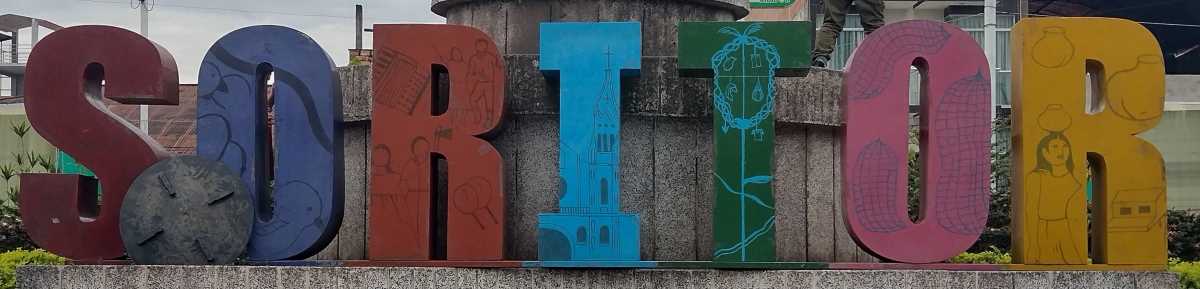
Soritor, Perú
July 21, 2025
Soritor might not make Perú's top-10 travel lists, and after walking its streets for a few hours, I understand why. While it does have a certain rural charm, the town feels like it's stuck between eras - some signs of progress, but a lot of rough edges. Most of the roads are still dirt, which kicks up a constant layer of dust. And although the Plaza de Armas has been nicely remodeled, much of the town looks and feels like a construction site that was paused halfway through.
What's surprising, though, is just how far back Soritor's history stretches. While modern Soritor was officially founded in 1857, the area's roots go much deeper - back to the 15th century. The name "Soritor" comes from the Quechua word Suri Turi or Suri Turuyoc, meaning "land of ostriches" or "where the ostriches walk." Or, according to another story, "Soritor" is a mash-up of "zorrito" (foxes) and "toro" (bulls)- as in something they would say way back then - "Let's go hunting foxes and bulls." In time, the incorrect pronunciation of the words ended up as the town's name.
According to local history on soritor.com, indigenous peoples settled in this fertile valley centuries before the Spanish arrived, drawn by the mild climate, rich soil, and proximity to the Mayo River. They were here as far back as the early 15th century. The Inca conquered the area and annexed it into their own terretory. A bit later, the Spanish conquistadors arrived searching for "El Dorado" - the land of gold. They conquered the area. The town's history has been passed down from generation to generation by voice and only in recent years has been recorded. It's been said the original town cemetary is where the current Plaza de Armas is located, and some human remains have been excavated in the past years.
One of the most prominent landmarks today is the cathedral Nuestra Señora del Carmen. While the building itself isn't particularly old or ornate, the cultural importance of the Virgin of Carmen in the region runs deep. According to a flyer I found posted on a board outside the cathedral, this particular devotion traces back to Mount Carmel in Israel and became widespread in the Catholic world after 1251. In Argentina, General José de San Martín even named her the patroness of the Ejército de los Andes in 1817. That same symbolic protection has echoed throughout Latin America, including here in Perú.
There's a monument to the peanut in the plaza, a nod to the town's former fame as the region's largest producer. That history is slowly being forgotten, even as Soritor still proudly clings to the title "Tierra del Maní." Modern agriculture has shifted toward rice, coffee, bananas, and dairy, with several distilleries and even a large dairy plant operating nearby. That said, you'd be hard-pressed to find a peanut-themed product in the local shops.
Living here has its challenges. The water system, for one, is a mess. It comes from shallow wells - just a couple meters deep - and locals boil it because the piping is poorly installed. The water and sewer lines run so close together that they often contaminate each other. It's a common complaint. There's one bank, no ATMs, no supermarket, and just a handful of tiendas with the basics. Restaurants are few, and empanadas apparently haven't made it this far up the Andes.
So, no - Soritor isn't exactly a tourist destination. But it is a place with roots. A place where dusty roads trace the footsteps of ancient people, where peanut farming once boomed, and where modern life is slowly, if unevenly, replacing the past. If you go, go to learn - not to be wowed. That's how Soritor reveals itself. Quietly. And with a little grit.

I used to teach English as a foreign language in Barranquilla, Colombia. Now I'm retired and traveling throughout South America.
I'm from Kennewick, Washington, USA. In my previous life, as I call it, I was an IT guy, systems administrator, computer tech, as well as a shipping/receiving guy and also worked as a merchandising guy in a RV/Camping store.