My Books on Amazon






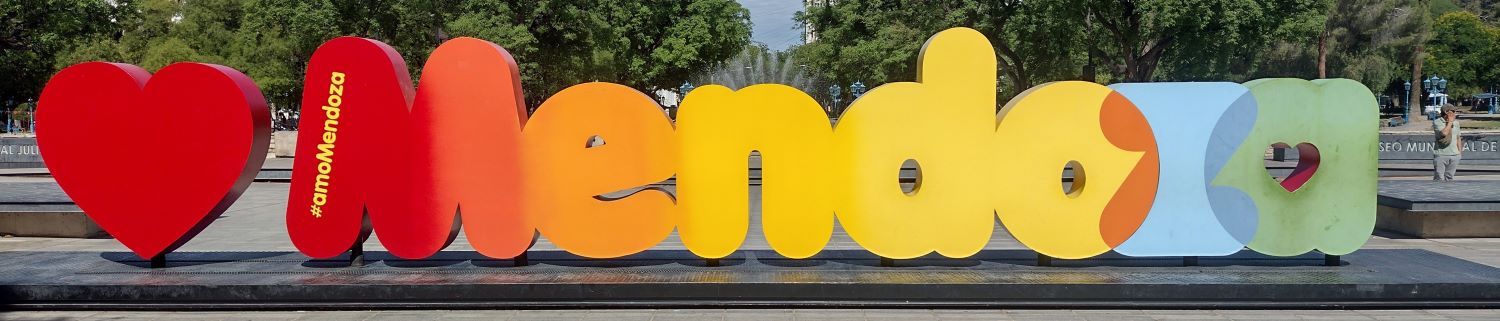
Mendoza, Argentina
November 22, 2024
I arrived in Mendoza, Argentina last Sunday afternoon, it was sunny and warm, and felt like an early summer day back in Seattle. As I walked from the bus terminal through the city center to the main plaza and across town to the apartment I rented for a few days, the first thing I noticed was how clean the city is. I mean the amount of litter could probably be counted on my two hands. And that was over a course of some 3-4 kilometers. Also, the city streets, downtown and in the suburbs, are lined on both sides by large mature trees, it's beautiful. This city impresses right from the get-go. The Plaza Independencia is a beautiful park, clean and well-kept, people sitting under the trees all throughout the park. I'm looking forward to spending four or five days here. The one thing that comes to mind that is a negative point for me is the climate. According to the stats it gets rather cold here in the winter. But for now, I'm going to enjoy a few days of very pleasant warmth in a pretty city.
This city has a relatively small city center but the suburbs extend far out into the valley. The population of Mendoza was about 115,000 in 2010, but the metropolitan area is over 1 million. The city center is one of the best I've visited, especially if you walk, as I do. The town's main plaza is Plaza Independencia, a very nice and big park in the center of the city. Around this plaza equally spaced are four other plazas, all very nice and well maintained. Those are spaced two blocks from each corner of Plaza Independencia. There are many other plazas and parks all throughout the city and it is obvious the city takes care of them all.
The biggest park is called Parque (Park) General San Martin. It has a long narrow lake, a golf course, a stadium, a bicycle velodrome, a museum, and much more. There are several sub-parks within it, and a nature reserve with trails for hiking. There's a hill with a monument at the top and views of the valley. The area near the park also has many sports related areas including a bicycle BMX park, a softball stadium, rollerblading track, skateboard park, soccer stadium, an equestrian area, and even a hockey stadium, which surprised me.
Mendoza dates back to 1561 when it was founded by Pedro del Castillo. The name he gave it was Ciudad de Mendoza del Nuevo Valle de La Rioja. Prior to its official founding the Huarpes and Puelches people lived in this part of the valley. The Huarpes designed a system of irrigation that was later further developed by the Spanish. This allowed for the population to increase, which it might not have otherwise occurred. The system is still used today in the trenches (acequias), which run along all city streets, watering the approximately 100,000 trees that line nearly every street in Mendoza. Those acequias have been relined over the many decades and today some are concrete lined, some are river-rock lined, and some are lined with cobblestone or pavers of various sorts. But they are the original acequias developed hundreds of years ago by the Huarpes.
Mendoza suffered a severe earthquake in 1861, estimated to have been 7.2 on the richter scale, that killed at least 5,000 people. The city was rebuilt, incorporating innovative urban designs that would better tolerate such seismic activity. Nearly all of the original colonial buildings were destroyed. Mendoza was rebuilt with large squares and wider streets and sidewalks than any other city in Argentina. Avenue Bartolomé Mitre and additional small squares are examples of that design, you can see pics of those and many other streets in the photo album.
Mendoza has a wonderful summer climate, the months of November - March, where the average daily high is 24° C (76° F), and a cold winter with an average temp of 11° C (52° F), and touches into the single digits of 2 - 4° C (35 - 40° F) in the months of June - August. Rain is low over the course of the year at 238mm/9.4 inches.
Of more than 240 towns/cities I have visited in South America, this is one of my favorites, but I can't consider it as a new hometown due to the cold winters. So, Encarnación, Paraguay, is still my number 1 choice, followed closely by Formosa, Argentina.

I used to teach English as a foreign language in Barranquilla, Colombia. Now I'm retired and traveling throughout South America.
I'm from Kennewick, Washington, USA. In my previous life, as I call it, I was an IT guy, systems administrator, computer tech, as well as a shipping/receiving guy and also worked as a merchandising guy in a RV/Camping store.