My Books on Amazon






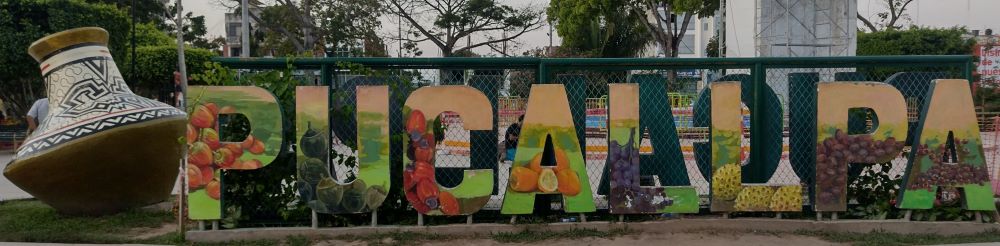
Pucallpa, Perú
August 7, 2023
Pucallpa, Perú, is a city in the central-east part of Perú. It is alongside the Ucayali River with the Amazon region starting on it's east side. The Pucallpa metro area has a population of about 396,000 which is far bigger than I am looking for in a new home town. But, I thought it would be a nice place to visit as it is the last city before entering the Amazon. The 2007 census shows that there were, in 2007, 114 people who indicated they could speak a foreign language, particularly English.
The region of the Ucayali River had been inhabited for some 3000 years by the Pano people. The Amazon region saw some of its first explorers in the 15th century, but it was very difficult due to the diseases that the explorers succumbed to. It is the 17th century where we find the first recorded explorations, and those were done by Catholic priests. In the 1800s, explorers discovered the area was rife with trees good for extracting the juice for rubber, and the 'Rubber Fever' years peaked in the late 1800s. In 1854, a logbook from Fernando Pallares mentions that they found a group of eight families and three Shipibo toddlers. This was the very beginning of what is now Pucallpa. A census from 1862 found 65 people. Pucallpa was founded in either 1883 or 1888. In the early 1900s, the contracts to build a railroad went out, and that connected Pucallpa to the rest of Perú. In 1928, electricity arrived, at first to light the church and neighboring buildings. The first airstrip was built in 1935. In the 1940s, the first road was cut through the jungles from the town of Tingo Maria (at the base of the Andes Mtns) to Pucallpa. The road was, of course, not paved and it was frequently unpassable due to damage from heavy rains. The problem was the land is more clay than anything else. But, with the new road came much commercialization and the town quickly grew. Even more so, the Ucayali River has been the biggest source of transporting goods to and from Pucallpa. The economy of Pucallpa depends on trade, the timber industry, and tourism. Those are followed by fishing, agriculture, and livestock. Pucallpa is also known for its high-quality pottery, which comes from the clay of the local land.
Pucallpa has a tropical monsoon climate. The average daytime high of 31° C (88° F), and the nightly average low of 21° C (70° F). The city's elevation averages 154 meters (505 feet). The average yearly rainfall amounts to 1570 mm (61.8 inches) of rain.
So, my impressions: The city itself is noisy and dusty and there is a fair amount of litter in the streets. The riverfront is ugly and crowded, but there is work being done on the riverfront park. This is obviously a guess, but I would say that at least 90% of the motor vehicles in the city are those noisy, smelly 3-wheeled moto-taxis. In some countries they are called tuk-tuks, but in South America they are simply moto-taxis. The city has an eco-park which has a zoo, but it's not worth visiting (see the pics in the photo album). On the river you can get a boat to take you to any of the many villages along the river or all the way to Iquitos (270 soles [about US$75] in a fast boat that will get you there in one day). There are buses that will take you west only, there are no roads going east, north, or south, from here.
My goal is to find a new place to live. So to reach that goal, I am traveling most of South America, visiting the countries of Ecuador, Perú, Chile, Argentina, Paraguay, passing through a bit of Brazil, and finally visiting Uruguay. I have a list of towns, about 70 that meet these qualifications: Cities with average day temperatures of 22-28° C (72-83° F) and night temps of 14° C (57° F) and higher; and a population between 28,000-300,000. I analyzed climate and population data of around 700 towns in the countries mentioned above and then pulled out the ones that meet the previously mentioned criteria, which leaves about 70. My preference leans towards towns of less than 100,000 people. And, now that I have visited more than 130 towns/cities (not including more than 70 in Colombia), I've decided I will want an inland town. I love the beach and walking in the warm water, but getting sunburned is just too easy, even on a cloudy day. At least here in Ecuador. I've also decided that any town with more than 100,000 population will be too big. I've decided that any small town/city (less than around 80,000 population) that meets the temp specifications and has a supermarket and ATM is one worth considering to live in.
My goal is to visit the towns and discover which one calls out to me - "Chip, Chip, make your new home here, this is your new home town". That hasn't happened yet, but the towns listed below are very close to giving me that feeling. At any rate, I have visited very few tourist attractions and archeological sites, etc, those will have to wait for another trip through South America.
My Top 10 list has eight towns on it:
- Tingo Maria, Perú
- Moyobamba, Perú
- Puyo, Ecuador
- Catamayo, Ecuador
- Mazamari, Perú
- La Merced, Perú
- Encarnación, Paraguay
- Formosa, Argentina
During my travels in Ecuador I visited 32 towns/cities. In Perú, I visited 30 towns/cities; in Chile, only five towns; and in Argentina, I visited 16 towns. In Uruguay, I visited five towns, and in Brazil, three. And in Paraguay I have visited 26 cities. That's 117 towns/cities outside of 77 I visited in Colombia while living there for 9 1/2 years.
Next up: Tingo Maria, Perú.

I used to teach English as a foreign language in Barranquilla, Colombia. Now I'm retired and traveling throughout South America.
I'm from Kennewick, Washington, USA. In my previous life, as I call it, I was an IT guy, systems administrator, computer tech, as well as a shipping/receiving guy and also worked as a merchandising guy in a RV/Camping store.