My Books on Amazon






Filadelfia, Paraguay
July 5, 2023
Filadelfia, Paraguay, has a population of about 20,000. Filadelfia is a relatively new town—it was founded in August of 1931. The town is considered to be one of the safest in Paraguay.
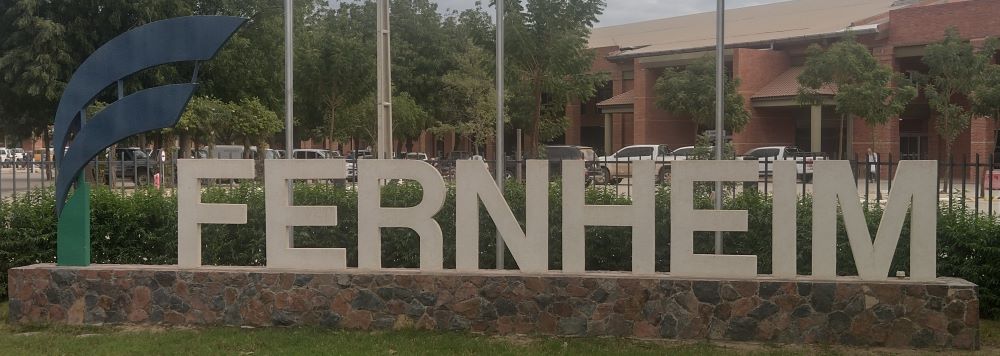
Filadelfia was founded by 1572 people who emmigrated from the Soviet Union and settled in this region. They founded a colony called Fernheim, in 1930. After that they started organizing themselves into 12 villages with 20 - 25 farms in each. A few more villages were added in the subsequent years, and now there are 25 of these villages. They then needed to organize themselves and the villages, and they chose the land in the center of the 25 villages and called this new town Filadelfia. From there they planned the town as a checkerboard, consisting of an industrial area, a commercial area, and neighborhoods. By 1977, they had to expand the commercial area of the city. In 2009, they paved their first few streets, about 4 kilometers of roads. Most of the roads in the area are sand, and most of that sand is like powder. Walking in it creates little puffs of dust with every step, and driving through it creates clouds of dust for people walking, and many do, to choke on.
Over the years, many more people, indigenous people from surrounding parts of Paraguay, moved to Filadelfia, to the point that now there are five different local ethnic groups represented within the town. Most of the groups live in their own neighborhoods and have their own schools that teach in their own language, with Spanish being taught as a second language. Because of the various groups the town has created several commissions to look after the needs of them. The Mennonite people speak a form of German called Mennonite Low German, and most also speak at least a conversational level of English, and only a small percentage of them speak any Spanish.
In 2014, they started a festival to celebrate the various groups and the cultures of each, and what each brings to the community. They share their native games and art, food, and more. This brings the many groups together and they have become more integrated.
Filadelfia has a semi-tropical climate. The average daytime high of 33° C (92° F), and the nightly average low of 20° C (69° F). The city's elevation averages 138 meters (453 feet). The average yearly rainfall amounts to 1000 mm (39.4 inches) of rain.
So, my impressions: Filadelfia is a small town. They have several museums of local history, but no old architecture, of course. I was told by a couple of local guys, construction workers, that this part of Paraguay is the most expensive area in the country. I can't figure that out. They have many, and I mean MANY, sand roads. Yes, sand. And this place is very, very dusty. It reminds me of the Atacama Desert, or the Altoplano Desert - sand and dust everywhere. The difference here is there are trees and other green plants, but they are more gray than green. Would I recommend anyone going out of their way to visit Filadelfia? Not unless you are really interested in the history of Mennonites in Paraguay. I had no choice but to stay two nights, as the bus to Argentina across the Pozo Hondo crossing only passes through town two times a week - Mondays and Thursdays. I can't find any info either online or here in town in regard to bus service on the Argentine side. But, I am sure there must be some kind of service for the people here to get to a larger town or city for shopping. I've asked many people about this, even the tourist office and the bus station have no info on the Argentine side of the border crossing. So, I'm going to take a chance, go up there, cross the border, and see what there is to see and hopefully there will be a bus to a bigger town.
My goal is to find a new place to live. So to reach that goal, I am traveling most of South America, visiting the countries of Ecuador, Perú, Bolivia, and Chile, passing through Argentina, visiting Paraguay, passing through a bit of Brazil, and finally visiting Uruguay. I have a list of towns, about 70 that meet these qualifications: Cities with average day temperatures of 22-28° C (72-83° F) and night temps of 14° C (57° F) and higher; and a population between 28,000-300,000. I analyzed climate and population data of around 700 towns in the countries mentioned above and then pulled out the ones that meet the previously mentioned criteria, which leaves about 70. My preference leans towards towns of less than 100,000 people. And, now that I have visited more than 30 towns/cities, I've decided I will probably want an inland town. I love the beach and walking in the warm water, but getting sunburned is just too easy, even on a cloudy day. At least here in Ecuador. I've also decided that any town with more than 100,000 population will be too big. I've decided that any small town/city (less than around 80,000 population) that meets the temp specifications and has a supermarket and ATM is one worth considering to live in.
My goal is to visit the towns and discover which one calls out to me - "Chip, Chip, make your new home here, this is your new home town". That hasn't happened yet, but the towns listed below are very close to giving me that feeling. At any rate, I am not visiting tourist attractions or archeological sites, etc, those will have to wait for another trip through South America.
At this point in my journey, I had ten towns on my Top 10 list, but I narrowed it down to four:
- Tingo Maria, Perú
- Moyobamba, Perú
- Catamayo, Ecuador
- Puyo, Ecuador
During my travels in Ecuador I visited 32 towns/cities. In Perú, I visited 26 towns/cities; in Chile, only five towns; and in Argentina, I visited 15 towns. In Uruguay, I visited five towns, and in Brazil, three. So far, I have visited 26 cities in Paraguay.
Next up: Salto, Argentina (again).

I used to teach English as a foreign language in Barranquilla, Colombia. Now I'm retired and traveling throughout South America.
I'm from Kennewick, Washington, USA. In my previous life, as I call it, I was an IT guy, systems administrator, computer tech, as well as a shipping/receiving guy and also worked as a merchandising guy in a RV/Camping store.