There are 498 blog posts for you to enjoy.
Caleta Cruz, Perú
January 20, 2023

Caleta Cruz, Perú: Population: less than 10,000 for the entire metropolitan area.
Caleta Cruz was designated a district in 1962. In 1532 the conquistador Francisco Pizarro placed a cross, the symbol of the Catholic church, on the hill over the region. Then in 1842 the cross was removed to the Church of La Merced in the town Piura (a little ways south of Caleta Cruz). Then sometime later it was again moved, this time to the National Museum of Archaeology, Anthropology and History of Perú in Lima. There is talk about building a museum at the original site and moving the cross back to its rightful place. In 1926 an oil exploration company came into the area and with their work they also constructed the first actual roads in Caleta Cruz. Prior to these roads the people used only trails to get around the area. Commercial fishing took off after 1946 bringing in more companies.
Read More
Corrales, Perú
January 19, 2023

Corrales, Perú: Population: for the entire metropolitan area, around 26,000.
Corrales was founded in 1871. In case you were wondering, the name Corrales is indeed translated to corrals in English. The name came from the fact that there were corrals for the cattle to milk them and provide milk to all the local people. These corrals were in the middle of what is now the town proper. If a person were leaving to go somewhere another might ask "Where are you going?" and the first might reply, "To the corrals". Over time, they started building houses around the corrals and the name stuck. Eventually, the corrals were converted into the main town center plaza.
Read More
Tumbes, Perú
January 18, 2023
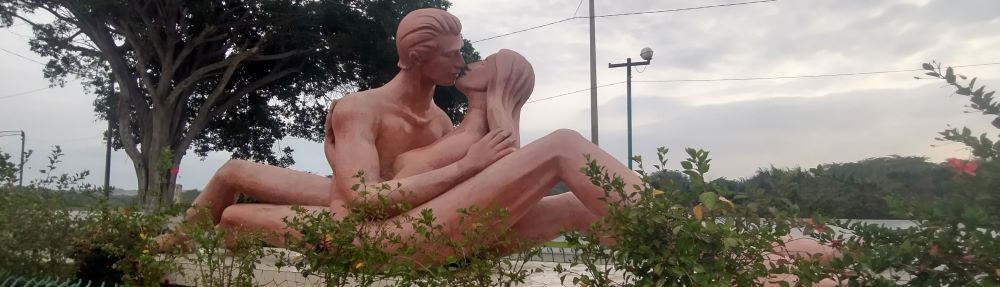
Tumbes, Perú: Population: around 115,000. The entire metropolitan area has a population of about 171,000. The town sits at the high elevation of 6 meters (20 feet). Alongside the town runs the Tumbes River. The photo above is a monument to lovers, this is something you'll never see in public in North America.
The origin of the town dates way back to the pre-Inca era when it was inhabited by the Tumpis people. At one point they had a population of about 178,000. Then after the year 1400, the Incas came in and took over the area and made it an important political center. Then a later Inca emperor started the construction of roads, houses, and palaces. The Spanish conquistador Pizzaro conquered the Incas and took over Tumbes in 1532. Then ensued fights over the Tumbes region starting with the Republic of Gran Colombia claiming it, then later Ecuador claimed it, then came the Perú-Ecuador war in 1941-42. Perú eventually won and was given the region of Tumbes. That was a long time in coming, actually, and occurred in 1998.
Read More
Huaquillas, Ecuador
January 17, 2023
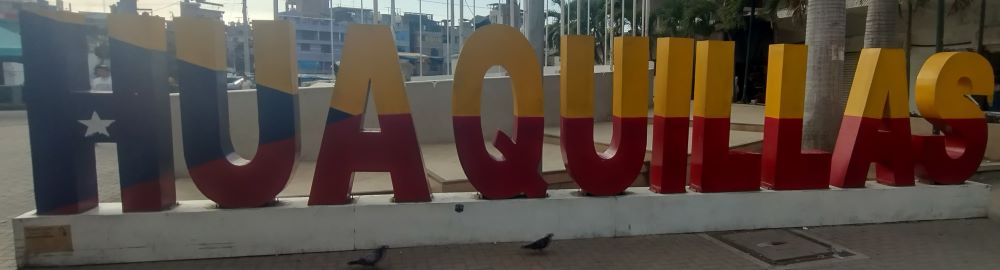
Huaquillas, Ecuador: Population: around 48,000. The entire metropolitan area has a population of about 82,000. The city didn't really start to grow substantially until the 20th century. The economy is based on shrimp farming, agriculture, and commerce.
By 1935 tobacco was the main source of income for the tiny town of about 200. The land was/is very rich and crops grew extensively, until the war with Perú in 1941. The Perúvians diverted the river and it has never been the same since. It wasn't until 1964 that the issue of the border with Perú was finally ironed out.
Read More
Santa Rosa, Ecuador
January 16, 2023

Santa Rosa, Ecuador: Population: around 85,000. The city didn't really start to grow substantially until the 20th century. The economy is based on shrimp farming, bananas, livestock, agriculture, some mining, and commerce.
Way back when, before the area was called Santa Rosa, there were two or three different groups of people living here, people who had previously been ruled by the Incas. There have been remains of their settlements found in the area of Santa Rosa. The "city" dates back to the mid-1500s but the conquering Spaniards didn't follow the regulations for founding a new city, so there are no founding documents. Some historians say the city was officially founded in 1600, and then a second time in 1617. From July 1941 until February 1942 there was a war, though not declared, between Perú and Ecuador.
Read More