There are 498 blog posts for you to enjoy.
Libertado General San Martín, Argentina
April 13, 2023

Libertador General San Martín, (AKA Ledesma), Argentina, population: about 47,000. Yet another basic agricultural town with nothing of interest to tourists. And, nothing here that says to me, "Chip, you need to make this your next hometown."
There is almost no historical information available for this town, but I did read that a Spaniard was here in 1623 leading an expedition. He founded a fort in 1625, but that only lasted until 1623 due to attacks from the local indigenous people. Skip forward to 1778 and a man named Zegada began processing sugar here. Skip forward again to 1899 and we have the founding of the town of Ledesma. In 1902, the leaders of the town started laying out the grid for roads and subdivisions within 8 blocks around the central square. In 1906, the railroad arrived which helped the town grow very quickly. In 1950, the name was changed to Libertado General San Martín.
Read More
San Pedro de Jujuy, Argentina
April 12, 2023
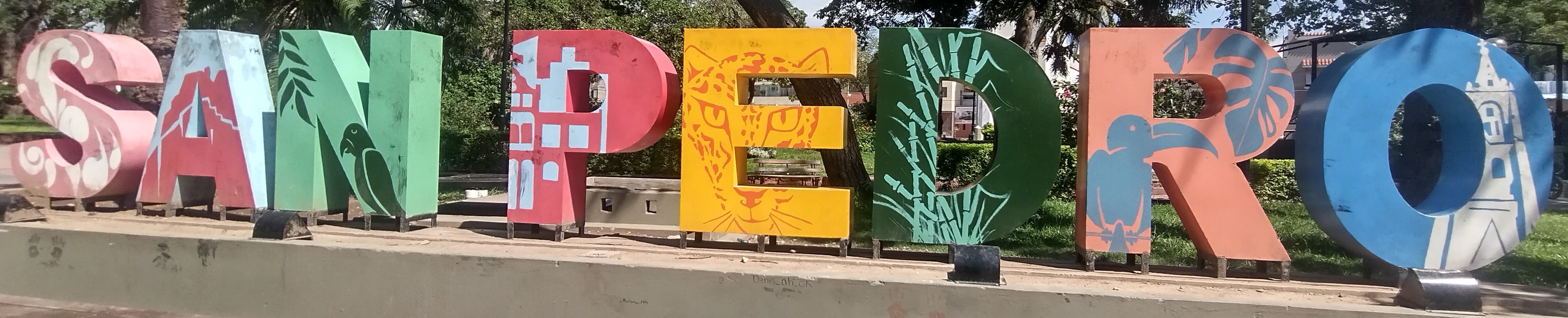
San Pedro de Jujuy, Argentina, population: about 60,000. Yet another basic agricultural town with nothing of interest to tourists. And, nothing here that says to me, "Chip, you need to make this your next hometown."
San Pedro de Jujuy was founded in May 1883. At the time of its founding the town already had a working sugar mill for some 13 years. It grew slowly and in 1913 was declared a municipality and had two flour mills. The railroad helped the city to grow a bit more. There is not much available in regard to the history of San Pedro.
Read More
General Güemes, Argentina
April 11, 2023

General Güemes, Argentina, population: about 31,500. Pretty much the only thing of note here are the two large plazas/parks, otherwise, this is not a town worth bothering to visit.
General Güemes was founded in 1888. Prior to that, it was a collection of farms and a Franciscan mission. The biggest of the farms eventually became the town of General Güemes. In 1890, the railroad arrived and with it, the town grew quickly. In 1907, the elementary school was opened, and in 1928, the town library was opened. In 1933, another school was opened to bring the level of grades up to 5. In 1937, the School of Technical Education was opened. The town's most important economic support is provided by a sugar cane processing plant which happens to be the first such plant opened in South America. Near the city are also two thermoelectric power plants and an industrial park.
Read More
Salta, Argentina
April 9, 2023
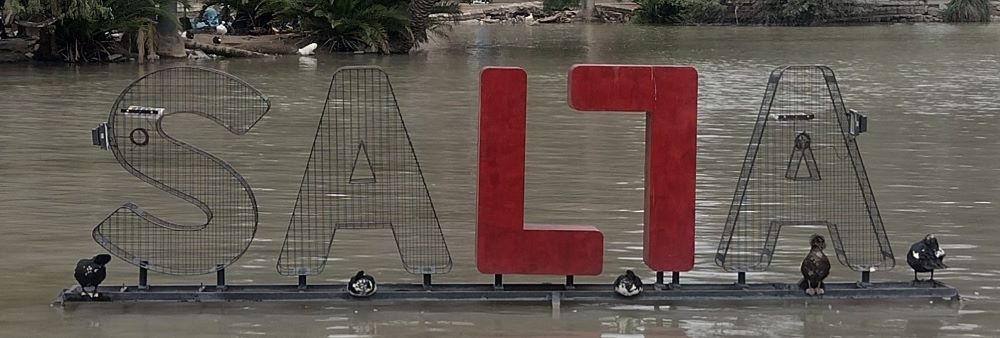
Salta, Argentina, population: about 535,000. Salta sits in the Valle de Lerma and the metropolitan area has a population of about 620,000.
Salta was founded in 1582 and the original plan was for it to be a stopping point between Lima, Perú, and Buenas Aires, Argentina. In the early 1800s, there was the War of Independence between Perú and some Argentina cities, and Salta was right there in the middle of it all as an important military staging area. By the time the war ended, Salta was pretty much bankrupt and in complete disarray. That condition continued until the turn of the 20th century. An influx of immigrants from Italy, Spain, Syria, and Lebanon gave the city new life, reviving trade and agriculture throughout the area.
Read More
Perico, Argentina
April 5, 2023
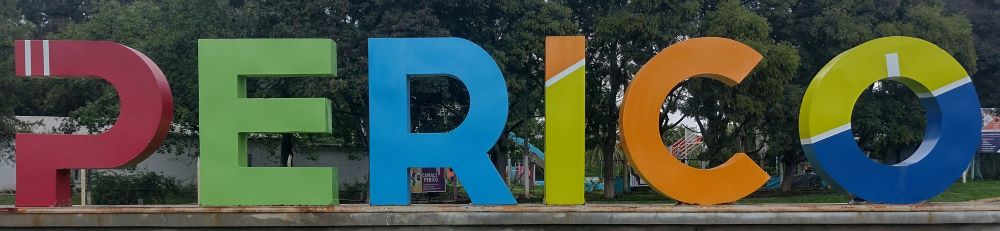
Ciudad Perico, Argentina, population: about 55,000. It is in a valley known as the "Valley of the Parakeets". If your only experience with parakeets is with the ones in pet shops then you really know nothing about them. The most notable thing is their noise. Hundreds will be in a single tree and all will be chirping away loudly and the volume is incredible. I remember a street in Barranquilla, Colombia where there are several trees that the birds prefer and they would mass in those trees by the hundreds, many many of them, all chirping away at the same time. It was almost deafening when walking past those trees. Well, they are all over South America and they are here in Ciudad Perico. Perico is Spanish for 'parakeet'.
Read More